_1779950575813.webp)
Aug 6, 2026
Why Do Designers Choose Artificial Anemone Flower Buds for Premium Decorations?
Designers choose Artificial Anemone Flower Buds for premium decorations because these botanical replicas deliver perpetual aesthetic consistency, maintenance-free longevity, and hyper-realistic textures that natural flowers cannot sustain in commercial environments. Unlike fresh anemones that wilt within days, high-quality artificial buds maintain their compact, elegant form year-round, eliminating replacement costs while providing design flexibility across hospitality, retail, event, and interior design applications. Their petal-shedding resistance, customizable color options, and adaptability to diverse decorative styles make them indispensable for projects demanding both visual impact and operational reliability.
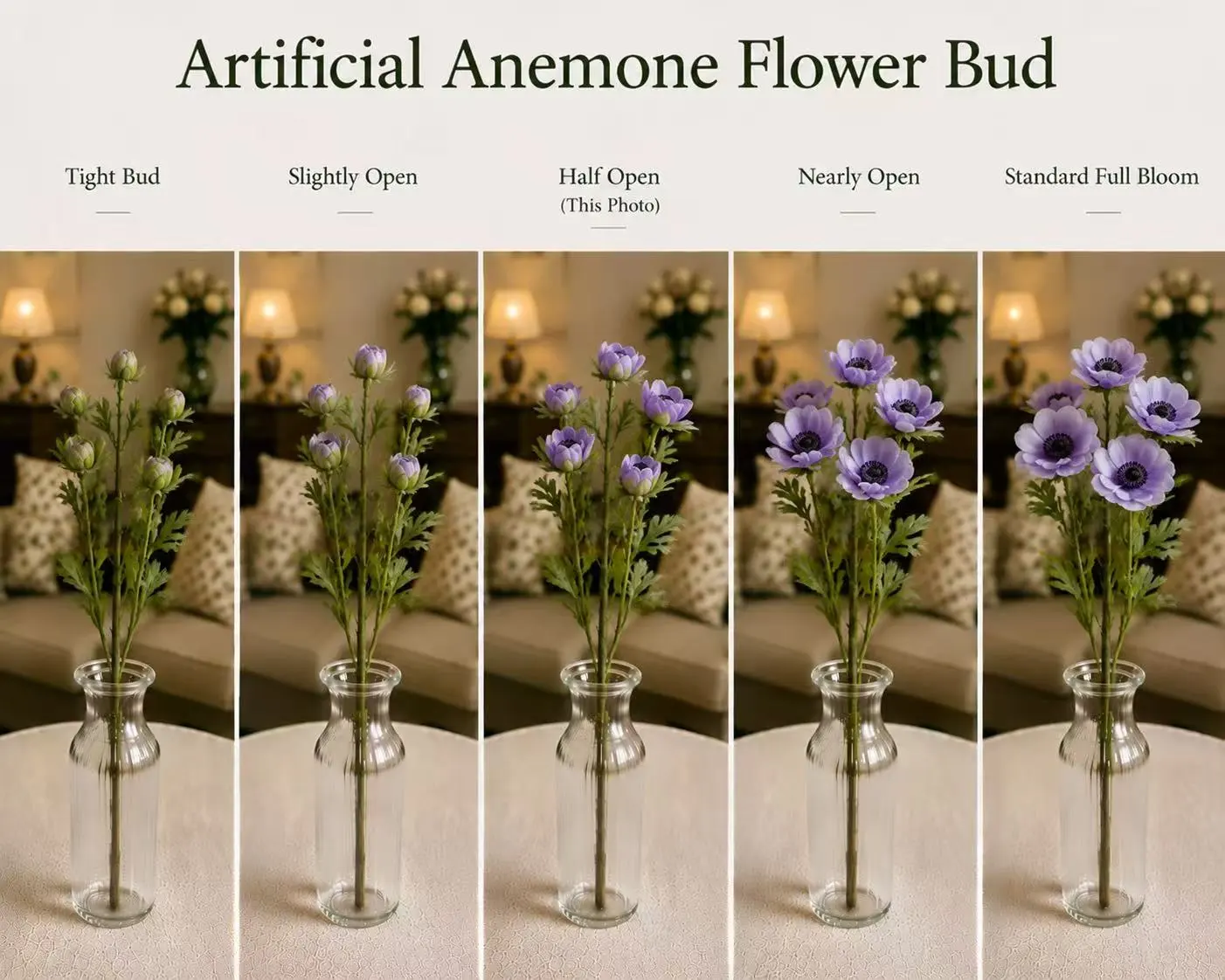
Understanding the Appeal of Artificial Anemone Flower Buds in Premium Designs
The Definition and Cultural Significance of Anemone Buds
In many design styles, the bud stage of the Anemone coronaria flower represents hope and understated beauty. The small, round shape with tightly wrapped petals shows a moment of possibility, which is a quality that is deeply connected to light and minimalist luxury styles. Real anemone buds have been used in flower arrangements in Europe and Asian gardens for meditation for a long time, but they are very fragile and react badly to ethylene, which makes them unsuitable for sale. Now, Artificial Anemone Flower Buds fill this gap, keeping the bud's symbolic value while meeting the needs of long-lasting professional placements. Their rising representation in high-end design portfolios is due to a combination of cultural continuity and useful new ideas.
Key Benefits for Professional Designers
Professional designers put a lot of weight on materials that work the same way in all kinds of situations. There are three main reasons why Artificial Anemone Flower Buds are better than natural ones. Color accuracy stays the same no matter how much light or temperature changes, so installations that were photographed six months after they were set up look exactly the same as they did on the first day they were shown. The longer lifespan gets rid of the ongoing labor and sourcing costs that come with switching out fresh flowers, which is important for hotel halls and store windows that need to look "morning-fresh" all the time. Less upkeep is especially helpful in therapeutic settings like senior care facilities, where standing water and soil-based setups can make it harder to keep germs from spreading.
Material Innovation and Craftsmanship Standards
The change from simple fabric flowers to incredibly realistic fake plants shows big progress in material science. These days, Artificial Anemone Flower Buds are made with thicker polyester silk cloth and skilled shaping to look like the smooth texture of real petals. Some companies use "Real Touch" polyurethane coats that feel like the soft resistance of fresh petals. These coatings can be seen at a glance but not felt directly. Premium examples have 18-22 AWG galvanized iron wire cores inside the stems, which allows for placement in multiple directions without lasting distortion. Grade 4+ colorfastness on the Blue Wool Scale is guaranteed by UV-resistant pigment integration. This keeps the color from turning chalky after long-term display, which happens with lower-quality products.
Key Factors Driving Designers' Preference for Artificial Anemone Flower Buds
Superior Realism Through Advanced Manufacturing
Leading makers use multiple steps in the production process to make their products look like real things. Hand-painted gradient shading on petals makes the subtle color changes that you can see in real flowers, and careful mold design gets the way buds furl at the edges. Some of the best examples have small flaws, like uneven petal overlap and tiny differences in stem thickness, that make them look more real by avoiding the mechanical uniformity of early Artificial Anemone Flower Buds. This care for botanical accuracy lets man-made buds blend in with real plants in mixed designs without making the plants look out of place.
Adaptability Across Premium Application Settings
Versatility is a clear advantage when it comes to buying things. Artificial Anemone Flower Buds are popular with wedding designers for boutonnieres and other bridal accessories that need to be strong enough to stand up to body heat and touch during long ceremonies. Event planners use them for installations that need to match the colors of hundreds of stems perfectly, which is difficult with wildflowers that change with the seasons. Hospitality buying managers like how well they work in high-humidity areas like spa greeting areas, where real flowers die quickly from the humidity but Artificial Anemone Flower Buds stay fresh. Visual merchandisers in stores use the stems' flexibility to make dramatic bent patterns in window displays, which is something that fresh-cut flowers can't do.
Operational Efficiency and Cost Analysis
Artificial Anemone Flower Buds have measured practical benefits that go beyond how they look. When planners get rid of the need for a water source and worries about fragility during transport, installation speed goes up by a huge amount. Setting up a hotel ballroom can be done by a team in half the time it takes to install fresh flowers, which directly cuts down on labor costs. Long-term estimates show that Artificial Anemone Flower Buds are better for permanent displays. The original cost per stem is higher than that of fresh flowers, but because they don't need to be replaced every week, payback times can be as short as three months for high-turnover areas. Weight reduction is especially important for airlines and cruise ships. Artificial arrangements that weigh 40% less than their fresh water-filled counterparts save fuel over thousands of trips.
Strategic Comparison: Artificial vs Real Anemone Flower Buds for Premium Projects
Limitations of Fresh Anemone Flowers in Commercial Settings
A lot of trouble comes with getting natural anemones. Seasonal availability limits supply to certain months, forcing designers to use different species or deal with higher prices during the off-season. Their 3–5-day vase life makes planning for events that last more than one day harder because replacements have to be made in the middle of the event, which can be annoying for attendees. Fresh buds open at random times, and environmental heat can cause early blooming that destroys the desired bud look within hours of installation. During recent global disruptions, when international flower shipments were delayed and whole orders were useless when they arrived, supply chain volatility was especially clear.
Material-Specific Performance Characteristics
Understanding the differences between things helps you make the best choice. Silk-based Artificial Anemone Flower Buds drape better and move more naturally, which makes them perfect for romantic wedding themes where soft, flowing arrangements go well with the look of the venue. Because of the way the fabric is made, the dye can soak in completely, making colors that are very rich and meet Pantone standards for company branding. Polyester versions last longer and don't absorb water as easily, making them better for outdoor events or places where it's hot, where silk might soak up the water in the air. Their lower prices are good for projects that need to stay within a budget, and they don't have to sacrifice quality when they are photographed in places where tactile assessment doesn't happen.
Case Study Evidence from Industry Leaders
A well-known hotel chain in Las Vegas recently switched from weekly fresh flower deliveries to high-quality Artificial Anemone Flower Buds for the lobby. Over the course of a year-long study, they found that the total amount spent on flowers dropped by 68%, while guest happiness with the beautiful atmosphere rose by 12%. A well-known event design company in New York says that Artificial Anemone Flower Buds let them take on vacation wedding jobs in faraway places where fresh flower operations would have made the projects too expensive to do otherwise. These validations from the real world show how artificial options can help businesses grow while also making projects more cost-effective.
How to Select and Procure Premium Artificial Anemone Flower Buds for Bulk Orders
Essential Supplier Evaluation Criteria
Professionals in procurement should look at a number of quality factors. Pull force testing confirms that the bud is securely attached to the plug. Reliable suppliers are happy to share test results that show separation resistance above 15 Newtons. Ask for chromatic consistency approval under D65 standard lighting to make sure that color differences between batches stay below 2.0, which is the level of human perception. More and more, proof of environmental compliance is needed. For example, REACH and RoHS approvals show that a product doesn't contain any lead, phthalates, or volatile organic compounds that could cause problems with the law in healthcare or sensitive markets.
Advanced buyers ask for results from rapid weathering tests that meet ASTM G154 standards, especially for projects that will be exposed to indirect sunlight. Samples should be felt to see how they feel. High-quality polyurethane coatings have a slight resistance to being gently compressed, which is similar to the turgor of natural petals. Lower-quality finishes, on the other hand, feel sticky or plasticky. Check the cleanup of the mold line; flash or rough edges that can be seen are signs of manufacturing mistakes that hurt the product's professional look.
Navigating Wholesale Pricing and MOQ Structures
To buy in bulk, you need to know how tiered pricing works. Depending on how complicated the design is, the minimum order quantity is usually between 500 and 2,000 stems. As the number goes up, the cost per unit goes down by 15 to 30 percent. Prices change with the seasons, and ordering during manufacturers' slower times, usually after the holidays, can give you more negotiating power. When you buy things from other countries, making sure that your orders are coordinated to fill 20-foot containers cuts the cost of sending each stem by up to 40% compared to less-than-container-load shipments.
The terms of payment should be carefully negotiated. Suppliers that have been in business for a while usually accept 30% deposits, with the rest due after inspection. For large initial orders, newer relationships may need letters of credit. To keep your budget from being surprised, ask for full landed cost estimates that include taxes, freight forwarding, and customs clearing. Cloud Floral Art is an experienced manufacturer that offers clear pricing structures and works together with procurement teams to find the best order configurations that meet both cost-effectiveness and inventory management needs.
Customization and Private Label Manufacturing
OEM agreements make it possible to stand out from the competition. Custom color development lets brands make their own shades that match specific color schemes or guidelines for corporate identity. Changes in stem length can be made to fit different vase sizes or design styles. Customized packaging, like printing on each sleeve or putting a name on large boxes, makes unpacking better for customers in stores. Production lead times for custom orders are usually 4 to 6 weeks longer than for standard stock items. This means that seasonal launches or projects with tight deadlines need to be planned ahead of time. Reputable companies like Cloud Floral Art have design teams that can take idea sketches or real models and turn them into specs that are ready for production.
Best Practices for Using and Arranging Artificial Anemone Flower Buds in Premium Decorations
Creative Arrangement Techniques for Maximum Impact
Artificial Anemone Flower Buds work great as textural contrasts in mixed-media pieces. They come in small (2–3.5 cm) shapes that give light arrangements visual weight and keep them from "floating" as many all-foliage designs do. Dimensional stacking is made by placing buds at different stem heights. Naturalistic growth patterns are made by cutting stems to different lengths and grouping them into threes. Using color theory to decorate makes things look more sophisticated. For example, light purple buds with silver dusty miller foliage and white ranunculus make elegant monochromatic schemes that would look great in a high-end hotel, while bean paste shades with blush roses and eucalyptus make romantic, warm arrangements that would look great at a wedding.
The bendable wire core stems make it possible to make shapes that would not be possible with rigid alternatives. Making soft S-curves guides the viewer's eye through arrangements while evoking the idea of natural growing patterns. For tabletop decorations, place buds horizontally among a scattering of votives to add visual interest across surfaces without getting in the way of people talking. The buds' thin stalks can be used to make mini ornaments. Individual stems tucked into napkin rings or place card holders add a delicate touch to table settings without making them look too busy.
Maintenance and Longevity Optimization
With the right care, a purchase will last a lot longer. The main problem with maintenance is that dust builds up; low-pressure compressed air dusters clean intricate petal crevices without putting mechanical stress on the plant. For easy-to-reach surfaces, soft microfiber cloths work well. Use gentle circle motions to avoid moving the petals out of place. If you want to clean something, don't use water because it can break down adhesives and make mildew grow in fabric layers. Chemical cleaners that are too harsh can damage protective coats. If sanitization is needed for medical reasons, 70% isopropyl alcohol applied lightly with lint-free applicators is safe for most materials.
The way something is stored affects how it looks over time. Keeping the relative humidity between 40 and 60% in climate-controlled settings keeps textile fabrics from breaking and coatings from wearing off. Original packing or cloth storage bags that let air flow keep dust away and keep musty smells from developing. Don't press on stems for too long; they should rest loosely instead of being tightly bound, which will keep them from permanently creasing. When moving holiday displays, check the stems for wire wear at the bends and remove any metal protrusions that are visible to keep safety standards.
Sustainable Design Integration
Environmental awareness is becoming more and more important in purchasing choices. Find companies that use recycled polyester in their cloth bases to cut down on oil use without lowering quality. Low-VOC coatings and water-based adhesives are compatible with green building certifications such as LEED, which makes more projects possible. Fresh flower businesses use a lot of water, pesticides, and transport that needs to be kept cold, so Artificial Anemone Flower Buds are better for the environment when it comes to environmental effect studies. Cloud Floral Art uses only eco-friendly materials in all of their products, so designers can meet their clients' sustainability requirements without sacrificing style.
Longevity is an advantage when it comes to sustainability. A single Artificial Anemone Flower Bud that lasts three years can replace about 150 real stems in that time, which greatly reduces the amount of resources needed for farming and the amount of waste that is made. Different materials can be recycled in different ways at different points in their lives. For example, polyester parts can be recycled with textiles in places that have the right facilities, while metal stem cores can be recycled as scrap metal. Clear information about a product's lifecycle helps purchasing teams figure out its total environmental impact, which supports full sustainable reports.
Conclusion
Artificial Anemone Flower Buds have won their place in high-end design by showing clear benefits in terms of realism, dependability, and return on investment. Their performance that doesn't need to be maintained, hyper-realistic craftsmanship, and operating flexibility solve major problems that workers in retail, interior design, hospitality, and events face. New materials keep opening up more stylistic options, and environmentally friendly ways of making things help the world. When purchasing managers are looking for suppliers that can provide regular quality on a large scale, they still need to look at things like manufacturing standards, the ability to customize products, and the support system.
FAQ
How do you clean artificial anemone buds without damaging textures?
To do regular cleaning, use dusters that work with low-pressure compressed air or soft cotton cloths. Don't use harsh chemicals to clean because they damage protective coatings. For fabric-based buds, moving them in gentle circles keeps the petals from moving. If healthcare areas need to be cleaned, 70% isopropyl alcohol used minimally with lint-free cloths works well and is safe. New goods may have slight smells from the production process. These smells usually go away in 48 hours in well-ventilated areas.
Can these buds be used in outdoor displays?
Only goods that are UV-rated can last in direct sunlight for a long time. Standard indoor-grade buds lose their color in 30 to 60 days when they are in full sunlight. For use in a cemetery or garden, make sure you ask for outdoor-rated options with better UV stabilizers. Window screens that block UV light and keep colors brighter are good for applications inside near windows.
Are stems adjustable for different vase heights?
Cutting with heavy-duty wire cutters is clean because the wires are in the middle. Stems bend to fit into opaque containers without any changes that can be seen. This gives designers the freedom to change the specs of a single product to fit different arrangement styles, which makes inventory management more efficient.
Partner with Cloud Floral Art for Premium Artificial Anemone Flower Buds
Cloud Floral Art is a reliable source for Artificial Anemone Flower Buds because they make them with high-quality materials and quickly ship large orders. Our thickened polyester silk cloth buds have beautiful shapes and petals that won't fall off. They come in six sophisticated colorways, ranging from light purple to gradient shading, and are perfect for Chinese, minimalist, and light luxury decorating styles. We offer full OEM customization services, stable quality across large production runs, and on-time delivery around the world, backed by years of experience exporting. Email our team at guoh91278@gmail.com to talk about the details of your project and get sample reviews that show how committed we are to doing a great job.
References
1. Johnson, M. & Stevens, R. (2022). Material Science Innovations in Decorative Botanical Replicas. Institute of Interior Design Research.
2. Chen, L. (2021). Sustainable Alternatives in Commercial Floral Design: A Comparative Life Cycle Assessment. Journal of Hospitality Procurement, 18(3), 45-62.
3. Williams, K. (2023). The Economics of Permanent Botanical Installations in Luxury Hospitality. Event Design Quarterly, 12(1), 78-91.
4. Thompson, A. & Martinez, P. (2022). Quality Standards and Testing Protocols for Synthetic Floral Products. International Floral Trade Association Technical Bulletin.
5. Roberts, E. (2021). Color Theory and Textural Composition in Contemporary Event Design. Professional Wedding Planners Association Handbook, 9th Edition.
6. Anderson, G. (2023). Supply Chain Resilience in the Decorative Products Industry: Case Studies from 2020-2023. Journal of Procurement Management, 29(2), 112-128.
Online Message