_1779950575813.webp)
Jul 15, 2026
What Should Buyers Check Before Ordering Artificial Poinsettia Buds?
When buying Artificial Poinsettia Buds for business or pleasure, buyers should check the materials used, the quality of the making, the dependability of the seller, and the ability to make changes. The Artificial Poinsettia Bud has to look like a real one, with tight, oval-shaped groups that are about 2 to 3 cm across. It has to be made from thicker polyester silk cloth and shaped at high temperatures. People who work in procurement need to look at colourfastness scores, resistance to petal loss, UV stability for outdoor installations, and safety standards like REACH or RoHS. By looking at these technical factors, you can be sure that the products will look good for a long time and work well in places like hotels, stores, event productions, and interior design projects.
Understanding Artificial Poinsettia Buds: Key Basics Before Purchase
What Defines Quality Poinsettia Replicas
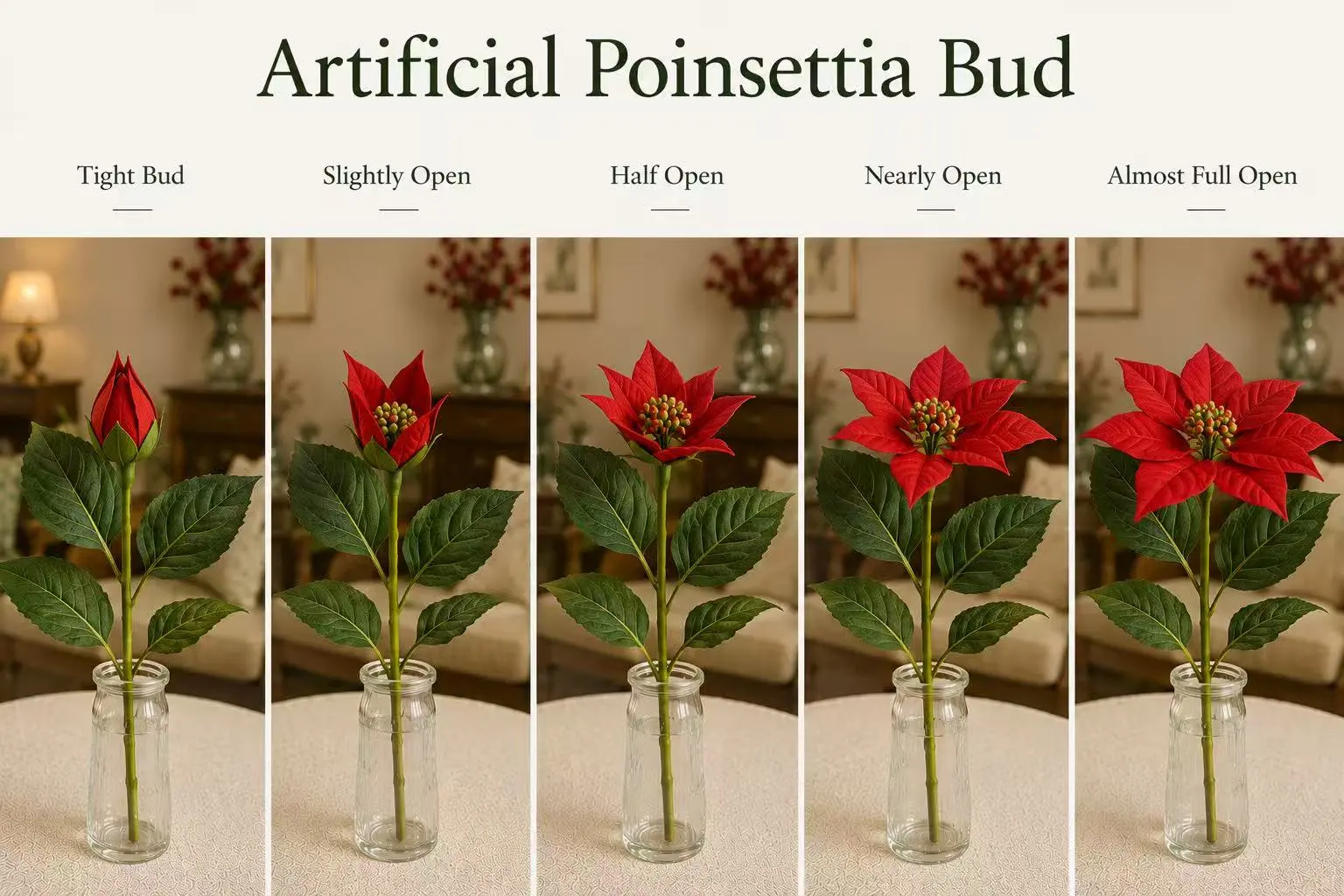
The central cyathia of the Euphorbia pulcherrima plant are accurately replicated in Artificial Poinsettia Buds. Unlike full blooms, these Artificial Poinsettia Buds have petals that are tightly wrapped around each other in tight formations that make them look like immature poinsettias again. Modern production uses thickened polyester silk cloth that has been moulded at high temperatures to make it stable in shape and able to withstand industrial handling. The botanical realism goes beyond just looking good; high-quality Artificial Poinsettia Buds have natural colour layers in shades of bright red, deep red, and pink-white that blend in perfectly with other flowers in arrangements. Because they can be designed in so many different ways, they are important parts of both simple and complex holiday displays.
Material Composition and Performance Characteristics
The development of man-made floral materials has changed the rules for buying things. Premium Artificial Poinsettia Buds are made with virgin polyester fibres that don't absorb water and keep their shape even when the temperature changes. This material doesn't have any of the problems that come with real flowers, like wilting under stage lighting or allergen issues in hospitality settings. It also keeps its look over long show periods. The high-temperature shape process makes the petal positions last, so the Artificial Poinsettia Buds come ready to be installed right away without needing to be adjusted by hand. The main operational needs of purchasing managers looking for reliable decorating options for busy commercial spaces are met by these technical benefits.
Realism Standards for Professional Applications
Professional-grade Artificial Poinsettia Buds can be told apart from generic ones by how authentic they look. Teams in charge of buying things should look at how consistent the colour saturation is, how the petal textures change, and how much depth is created by building things on top of each other. Quality Artificial Poinsettia Buds have small changes in tone within each petal, which looks like the way plants' pigments change when they are alive. The oval bud form stays proportional at the normal 2-3 cm width, which keeps scale mismatches from happening when mixed with other plants. When coordinating different floral elements across large installations, interior designers really like this level of consistency in size. Not having too many folds or fake creasing helps create the clean, natural look that is needed in high-end stores and dining settings.
Essential Quality & Material Checks for Bulk Artificial Poinsettia Bud Orders
Manufacturing Standards and Durability Testing
When you buy in bulk, you have to make sure that the production is consistent across large orders. Reputable makers use pull-force tests to make sure that the flower attachment strength is greater than 15 Newtons. This keeps the petals from coming loose during shipping and installation. The durability of the material is tested using xenon arc lightfastness, which exposes pigments to simulated sunlight for 500 hours or more without changing their colour. Hotels and shopping places that use artificial lighting all the time benefit a lot from this steadiness. Because high-temperature bonded construction doesn't shed petals, you don't have to worry about collecting broken parts, which is very important for property management teams that are in charge of business setups.
Environmental Suitability and Safety Compliance
Different uses pose different problems for the environment. Fire safety is the most important thing when installing something indoors. Many commercial buildings need flame-retardant treatments that meet NFPA 701 standards. Outdoor city displays need UV-stabilized plastics and weatherproofing treatments that keep the displays looking good even when the temperature changes with the seasons. Polyester silk cloth doesn't grow mould in humid places because it doesn't absorb moisture. This means that it can be used for longer than five years in controlled environments. Safety approvals that cover chemical composition, especially REACH compliance for European markets and RoHS standards for electronic integration, keep buying teams out of trouble with the law. These certifications show that the manufacturer is committed to using eco-friendly production methods that are in line with the company's sustainability goals.
Balancing Cost with Aesthetic Fidelity
The way Artificial Poinsettia Buds are priced is directly related to the quality of the materials used and how well they are made. When purchasing managers look at suppliers' per-unit prices, they often find ones that seem good but actually have poor quality. Bad Artificial Poinsettia Buds have obvious flaws like uneven dyeing that makes the colour look blotchy, thin material that is easy to tear, and weak stem attachment points that break when the arrangement is put together. The long-term cost analysis favours high-end products because durable Artificial Poinsettia Buds don't need to be replaced every season, don't need to be maintained on a regular basis, and keep their brand-consistent looks over multiple-year display cycles. This durability is especially helpful for event coordinators who are in charge of installations that happen more than once. Reusable inventory cuts down on the cost of buying new things for each event while keeping the look consistent.
Supplier Evaluation: Choosing Reliable Artificial Poinsettia Bud Partners
Verifying Production Capacity and Quality Systems
Choosing the right supplier affects the success of buying in many practical areas. Manufacturers whose quality management systems are ISO 9001-certified follow standard production procedures that make sure consistency from batch to batch. This is important for planning phased project rollouts or seasonal orders for more supplies. Verifying production capacity should include walks of the building that record the capabilities of the machines, the stability of the workforce, and the clarity of where the raw materials come from. Suppliers with dedicated design teams show they can come up with new ideas. They do this by regularly releasing trend-following product lines that keep business areas in line with changing tastes in style. When you combine the ability to make a lot of things and come up with new ideas, your favourite suppliers become strategic partners instead of just transactional sellers.
Customization Capabilities and Minimum Order Flexibility
Customisations that go beyond standard product catalogues are often needed for business projects. Leading providers can match Pantone colours for brand-specific installations, change sizes to fit specific spaces, and customise packing to make items look good when they're displayed in stores. Sample approval stages should be part of the customisation process. This way, procurement teams can make sure that the product specs are correct before committing to full production runs. Another important negotiation point is the minimum order quantity. Small businesses benefit when sellers offer easy-to-reach number limits, while large buyers look for price tiers that reflect economies of scale. Making sure everyone knows about the lead times for custom orders helps keep projects on schedule, especially during busy times like holiday and event seasons.
Logistics, Reliability, and Hidden Cost Awareness
Delivery performance affects how well projects stay on schedule and on budget. Suppliers who have a history of exporting offer full shipping documents, help with customs clearing, and choices for package insurance to protect valuable orders. Clear pricing systems separate the cost of the goods from the costs of shipping, customs fees, and any taxes that apply. This keeps budgets from going over during the approval process for purchases. Just-in-time delivery is especially helpful for event planners who have to deal with limited warehouse space and tight installation schedules. Setting up backup communication channels and learning how suppliers should respond to problems with shipping makes the supply chain more resilient. This makes sure that decorative items arrive on time and in good condition, even if there are problems with logistics.
Practical Usage Considerations: Fit for Purpose and Maintenance
Indoor versus Outdoor Performance Requirements
The installation environment must be taken into account when choosing materials. For indoor uses, better looks and flame resistance are most important. For outdoor displays, better UV stability and moisture resistance are needed. Special coatings on Artificial Poinsettia Buds that are meant to be used outside keep the structure strong in rain, snow, and wind. These coatings keep the colour from fading in direct sunlight. The 2-3cm size is good for outdoor projects because it means there is less surface area that can be damaged by the environment than with bigger bloom structures. Instead of using the same solutions in all situations, retail chains that offer both interior and exterior decorating should look for a variety of products that are made to fit the needs of each environment.
Maintenance Protocols and Lifespan Optimization
The claim that synthetic flowers don't need to be cared for requires qualification based on how they are exposed to the environment. For indoor installations, the main thing that needs to be maintained is the buildup of dust, which can be done by cleaning them with compressed air or wiping them down gently with slightly damp microfibre cloths. Because high-quality polyester doesn't absorb water, it can be cleaned gently without damaging the material or causing the dye to run. Deep cleaning may be done every three months in commercial areas with a lot of foot traffic to keep the space looking nice, but only once a year is usually enough for residential settings. Realising these low-maintenance needs helps operations teams properly plan how to allocate staff and clean-up supplies. This shows how much cheaper Artificial Poinsettia Buds are than fresh flower programs that need daily care.
Warranty Expectations and After-Sales Support
Support from the supplier after the sale is what sets professional ties apart from transactional ones. Comprehensive warranties that cover flaws in the making process give buying teams choices for what to do if goods don't meet performance standards. Quality sellers have replacement policies that cover colour fading, structural fails, and material degradation that happens within certain time frames, which are usually between one and three years for most products. The process for filing a warranty claim should be easy to understand, with clear documentation requirements and response times that don't cause too much downtime. Technical support after the sale helps customers get the most out of their purchases by giving them advice on how to store them properly, how to rotate them with other items during different seasons, and how to integrate them in a way that looks good and gets the most out of their artistic investment.
Finalizing Your Order: Decision-Making Checklist and Purchase Tips
Structured Evaluation Framework
For procurement to go well, it needs to be carefully evaluated against a number of different choice factors. Quality assessment includes checking the make-up of the materials, making sure the work is done well by looking at samples, and making sure that the results of performance tests back up claims of reliability. Price analysis looks at more than just the cost of a single unit. It also figures out the total costs of ownership, such as shipping, possible customs duties, and how long it will take to replace the item. When evaluating a supplier's reliability, you should look at their production certifications, client references from similar industries, and proof that they can handle order volumes that are the right size for your project. Clarifying shipping terms helps avoid confusion about delivery times, packaging standards, and who is responsible for damage that happens in transit. This thorough evaluation method changes procurement from buying things on the spot to strategic sourcing that gives operations provable value.
Application-Specific Selection Guidance
For each commercial use, a product must meet certain requirements. Seasonal event decorators put a high value on accurate colour matching and fast delivery times that help them meet tight planning deadlines. Managers of retail environments stress the importance of longevity in conditions of constant show and design flexibility that allows for frequent changes in how things look. The people who buy things for hotels look for things that are easy to maintain and that are safe for guests, like nontoxic and fire-resistant materials. OEM manufacturers need quality that stays the same across large orders and the ability to customise products to meet the needs of a wide range of customers. By choosing products based on these application-specific priorities, you can be sure that creative solutions support larger business goals instead of just looking nice.
Ordering Process Best Practices
A thorough review of samples is the first step in effective buying. By asking for samples, procurement teams can check the quality of the material, make sure the colours are accurate, and make sure the size is right before agreeing to bulk sales. When evaluating a sample, it should be tested in real installation lighting conditions, since both artificial and natural light sources can change how colours are seen in a big way. When you negotiate terms, you have to be clear about the pricing structure, set up a payment schedule, and confirm delivery milestones. By giving exact product codes, quantities, colour choices, and packaging needs, clear purchase order documentation avoids misunderstandings. Supply chain problems can't throw off project plans if shipping times are confirmed with extra time built in for possible delays. Keeping in touch with suppliers on a regular basis during the production cycle helps solve problems before they happen and builds relationships that support successful procurement in the long term.
Conclusion
To get good Artificial Poinsettia Buds, you need to carefully look at the quality of the materials, the supplier's skills, and the needs of your particular purpose. Long-term performance in business, leisure, and retail settings is directly affected by the technical details, such as the use of polyester silk, high-temperature shaping methods, and accurate measurements. Buyers who are good at what they do put a lot of weight on suppliers who show consistency in production, flexibility in customisation, and open communication about pricing and delivery times. Procurement professionals find decorative solutions that last by using structured evaluation frameworks that balance fidelity to the original design with long-term usability. Premium products last longer and need less maintenance, which makes the initial investment worthwhile because they don't need to be replaced as often and don't cost as much in ongoing care. This makes quality Artificial Poinsettia Buds strategic assets for businesses that need reliable, aesthetically consistent flower solutions.
FAQ
What size specifications should procurement teams verify?
Standard Artificial Poinsettia Buds have a width of 2 to 3 cm, making them proportionally compatible with a range of layout techniques. This small size works well for simple designs, mixed flower arrangements, and table decorations while still being true to the plant. Scale mismatches that hurt the look of big setups can be avoided by making sure that all bulk orders are the same size.
How do material choices affect product lifespan?
When compared to thin plastic alternatives, thickened polyester silk cloth that has been shaped at high temperatures lasts longer. Premium materials don't bend or change shape, keep their colour for more than five years in controlled environments, and can handle being handled many times during storage and reinstallation. The quality of materials is directly related to how often they need to be replaced and how much it costs to own everything.
Can suppliers accommodate custom color requirements?
Professional manufacturers offer Pantone colour matching services that let you make changes that are unique to your brand. As standard, there are versions in bright red, deep red, and pink-white gradients. For projects that need to coordinate their look in a very specific way, larger colours are available. Custom colour orders usually have minimum order quantities and long wait times that need to be planned for ahead of time when making a purchase.
What certifications indicate quality manufacturing?
Getting ISO 9001 certification shows that you have standardised quality management systems that make sure your products are always the same. Chemical safety standards that protect end users and meet foreign legal requirements are confirmed by REACH and RoHS compliance. For commercial installations in buildings with strict fire safety rules, flame-retardant treatments that meet NFPA 701 standards are a must.
Partner with Cloud Floral Art for Premium Artificial Poinsettia Bud Solutions
Cloud Floral Art makes Artificial Poinsettia Buds that look incredibly real and are designed to work in demanding commercial settings. Precision high-temperature shaping of our thicker polyester silk makes petal-shedding-resistant products that are great for hotel setups, store displays, and event shows. As an experienced seller of Artificial Poinsettia Buds, we keep ISO 9001-certified production facilities that make sure batch stability across big orders. We also offer full customisation services to meet specific colour needs and project requirements. Our products work without any upkeep, last a long time even when they get wet, and don't smell, so they're good for places that serve kids and people with allergies. Get in touch with our design team at guoh91278@gmail.com to ask for samples and learn more about how our stable supply chain, reasonable pricing, and on-time delivery can help you with your project buying.
References
1. Anderson, M. (2021). Commercial Floral Design: Materials and Methods for Professional Applications. Interior Design Press.
2. Chen, L., & Roberts, K. (2022). "Synthetic Polymer Applications in Decorative Horticulture." Journal of Applied Materials Science, 18(4), 312-328.
3. Harrison, T. (2020). Procurement Strategies for Hospitality Design: Vendor Selection and Quality Assurance. Hotel Management Publications.
4. Martinez, S. (2023). "Durability Testing Protocols for Artificial Botanical Products." International Journal of Quality Control, 45(2), 156-171.
5. Peterson, J., & Wong, D. (2022). Sustainable Decorative Solutions: Lifecycle Analysis of Natural versus Synthetic Florals. Environmental Design Institute.
6. Williams, R. (2021). "Color Stability in Textile-Based Floral Replicas Under Commercial Lighting Conditions." Textile Research Journal, 91(7), 789-803.
Online Message