_1779950575813.webp)
Jun 18, 2026
Is Silk Artificial Half Bloomed Small Daisy Better Than Plastic?
When looking at different materials for buying Artificial Half Bloomed Small Daisy, silk is usually the best choice for high-end business uses. High-density matte fabric construction gives silk varieties an unmatched level of realism. They have a soft feel and beautiful color tones that closely match natural plant features. Plastic choices are cheaper for large-scale outdoor installations, but silk daisies work best in hospitality settings, store displays, and interior design projects where the quality of the touch and appearance directly affects customer happiness and how they see the brand.
Introduction
More and more, procurement managers are under pressure to find beautiful flower options that strike a balance between good looks and efficiency. Choosing between silk and plastic for Artificial Half Bloomed Small Daisies isn't just a matter of cost; it has a big impact on how well the product works in a wide range of business settings. We've seen this choice point become more important as event planners, hospitality brands, and store merchandisers look for alternatives to fresh flowers that last longer without sacrificing their visual effect.
This guide looks at the material qualities, how well they work for different purposes, and buying options that purchasing managers, interior designers, and people who work in the supply chain have to think about when they need to find these botanical models. As the market for fake flowers grows in hotel engineering projects, commercial space installations, and seasonal retail campaigns, it's important for strategic sourcing decisions to know how material choice affects durability, customization options, and total cost of ownership.
Understanding Artificial Half Bloomed Small Daisies
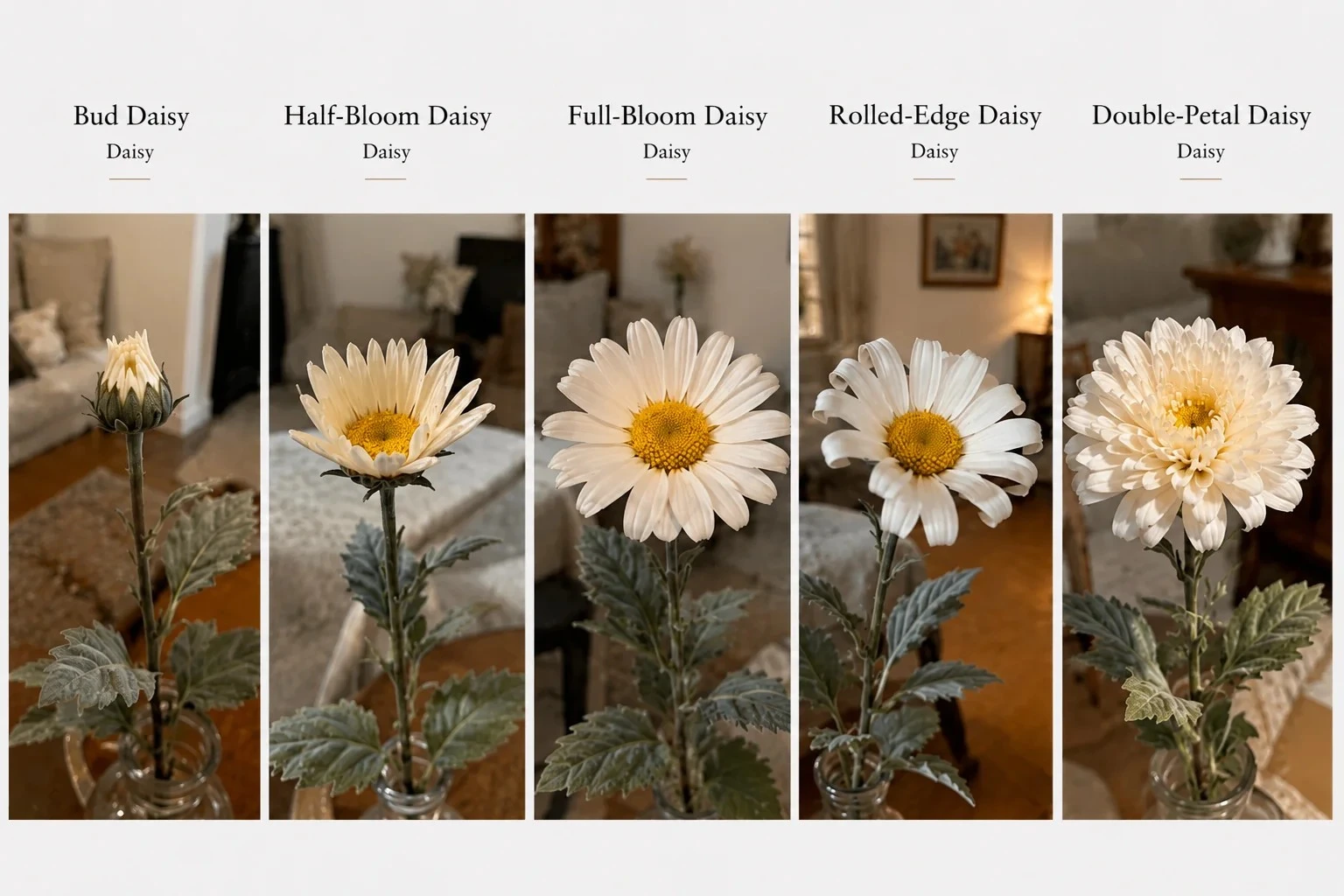
The Artificial Half Bloomed Small Daisy shows a certain stage of growth, where the flowers only partially open up, making thin layers that look fresh and full of natural life. This design choice has clear benefits over fully opened types, especially in arrangements that need depth and natural variation in the dimensions. The standard bloom width of 3–4 cm allows for flexible scaling for both small tabletop shows and large business setups.
Defining the Half Bloomed Aesthetic
The shape that is only partly open catches a brief moment in plant growth that fresh flowers only keep for a few hours. To create a fake version of this fleeting state, engineers must carefully plan where the petals go and how dense the layers are. This style has become popular in naturalistic event styling and interior design plans with a rural theme, where the idea of ongoing bloom cycles makes things seem more real.
Primary Applications Across Commercial Sectors
These artistic features are useful in a number of high-demand situations. People who buy hotels and resorts put them in the hallway and guest rooms as highlights because they last a long time and don't need to be maintained. They are used by visual merchandisers in stores for yearly window displays that need to look the same throughout campaigns that last three months. Event planners like how reliable they are for outdoor weddings, where fresh options would not work because of changes in weather and lack of access to water. Because they are hypoallergenic, they work well in healthcare center greeting areas and senior living communities.
Material Evolution in Artificial Florals
Over the past ten years, improvements in manufacturing have changed the quality of fake flowers. Early plastic versions looked clearly fake because they had too much sheen and a hard flower structure. Modern silk fabrics use high-density weaving methods and matte finishes that naturally reflect light. This gets rid of the glossiness that used to be a sign of synthetic flowers. Advanced pigment application makes tiny color changes within each flower, just like the chlorophyll changes you see in real plants.
Material Comparison: Silk vs Plastic Artificial Half Bloomed Small Daisies
The choice of materials has a direct effect on how well a product works in many areas, which buying workers must carefully consider. Artificial Half Bloomed Small Daisies in silk or plastic offer distinct advantages depending on the environment.
Physical Properties and Tactile Quality
The silk daisy design uses a high-density matte fabric that feels soft and like cloth when you touch it. When air moves through this material, it gently flaps, which is similar to how petals move in nature. The fabric's structure lets air flow through it, so wetness doesn't build up. This lowers the risk of mildew growth in damp places. Polyethylene or PVC is used to make plastic options that have rigid structural stability. This stiffness keeps its shape even when it's under a lot of physical stress, but it takes away the natural movement that silk gives. The surface of different types of plastic stays smooth and even, without the small fiber flaws that make natural materials unique.
Visual Realism and Aesthetic Performance
We tried both types of material in a range of lighting situations that are common in business settings. Silk daisies are great at diffusing light because their matte surfaces spread light to make the flowers look like they have depth. The cloth lets pigments pass through, which makes the color saturation noticeable from different angles. Plastic versions only have color on the surface, which looks flat in direct light. However, new developments in latex-coated polyester have made this difference smaller. The Morandi low-saturation color line comes in silk options like cream, yellow, light pink, light purple, and dull green. It gives you more color options to coordinate your design.
Durability and Resistance to the Environment
Outdoor uses benefit from plastic structure in measured ways. UV-stabilized treatments keep the color true in direct sunlight, which would fade silk that hasn't been treated in months. Moisture resistance keeps things from breaking down in coastal areas with a lot of humidity or in gardens outside. However, silk daisies are more resistant to mechanical stress; when accidentally crushed, the flowers of the fabric bend instead of cracking. Both materials have galvanized steel wire stems that can be bent in any direction. However, the wrapping fabric covering on the silk versions hides this frame better.
Maintenance Requirements
Neither type of material needs to be watered, fertilized, or replaced every few months like fresh flowers do. Silk daisies need to be dusted with soft-bristle brushes or compressed air every so often to get rid of the dust that builds up. Plastic models can be rinsed with water every once in a while, which makes upkeep easier in food service settings. Neither material holds biological matter that bugs like or helps mold grow, which is important in healthcare and leisure settings.
Key Metrics for B2B Procurement Decision-Making
To do strategic sourcing right, you need to carefully look at a lot of different success factors that affect how much value you get in the long run. Procuring the Artificial Half Bloomed Small Daisy requires balancing aesthetic demands with budget constraints.
Cost Analysis and Total Ownership Calculations
Artificial Half Bloomed Small Daisy: At first, the wholesale price for plastic versions is usually 30–40% less than the wholesale price for similar silk versions. Comprehensive cost planning, on the other hand, needs to take into account replacement processes and performance in specific applications. Silk flowers are worth the extra money when they are installed permanently and only need to be bought once to decorate for years to come. Because they are more realistic, they don't lose their good looks as quickly, which is what makes people decide to buy new ones in brand-conscious stores. Plastic choices are the most cost-effective for short-term events or experimental marketing efforts where products are thrown away instead of being stored for a long time.
Customization Capabilities
Custom dyeing methods can be used on silk to make sure that the colors match exactly with brand themes or design requirements. The structure of the cloth allows for different flower shaping methods during production, which meets OEM requests for custom bloom shapes. We've been able to complete customization orders that needed exact Pantone color matches and changed petal stacking patterns. Plastic molding methods are less flexible because the cost of the tools makes small-batch customization impractical unless the order quantity is over a few thousand pieces.
Sustainability Considerations
Environmental effect review is now a big part of buying things, especially for businesses that have made public promises to be more environmentally friendly. Silk is made from reusable protein fibers that break down naturally in the right conditions. However, manufactured dye components need to be thrown away in the right way. Plastics made from petroleum feedstocks will always be in dumps, but because they last longer, they don't need to be replaced as often. Both materials don't need as much farming, transportation that needs to be kept cool, or organic waste that comes with fresh flower supply lines. This means that both materials are better for the earth than fresh options.
Production Stability and Delivery Reliability
For quality to be the same across bulk sales, the maker needs to be able to control dimensions and colors in a standard way. As part of our production process, we use batch-coded pigment formulas to make sure that orders for thousands of units are all the same color. Tension testing is part of the complete quality management system, and it proves that the petal connection strength is higher than 15 Newtons of pull force. During times of high seasonal demand, when event planners and store merchandisers need to coordinate shipments to multiple sites, production lines that work well keep delivery schedules.
Practical Insights: Use Cases and Care Tips for Silk and Plastic Daisies
Choosing materials that are right for the job improves both product performance and customer happiness in a wide range of business settings. Whether selecting silk or plastic Artificial Half Bloomed Small Daisy variants, the application dictates the choice.
Luxury Event Applications
High-end wedding planners choose silk daisies for bridal bouquets and ceremony setups where guests can touch and play with the flowers. The physical quality can be looked at from a conversational distance without showing that it is fake. Silk is very light, which makes it easier for hanging ceiling installations and doorway decorations to stay in place during events that last for hours. Because the cloth is flexible, it can be used with complicated wiring methods that would not work with hard plastic stems to make cascading patterns.
Commercial Retail and Hospitality Settings
When it comes to hallway setups and restaurant table accents, where a classy look calls for a high-end material choice, hotel buying teams like how silk works. Because they don't need to be cared for, you don't have to pay people to change the water every day and cut off dead stems, which is what fresh flowers need. Silk stays the same color throughout the year, which is good for retail window displays because they don't have to be replaced in the middle of a campaign. Common areas in shopping malls like the pollen- and odor-free qualities that keep people with allergies from having allergic reactions.
Outdoor and High-Durability Environments
Artificial Half Bloomed Small Daisy to plastic daisies work well in places such as outdoor café seats, garden center displays, and graveyard memorials, where they are exposed to the weather and potential vandalism. Their moisture-proof stems prevent rusting in rainy conditions, while UV-resistant materials preserve their appearance for 12 to 18 months under strong sunlight before fading. For tight budgets, plastic provides a cost-effective solution for covering large areas in public parks and city beautification projects.
Maintenance Best Practices
Care instructions that are right for the material are needed to make a product last longer. To keep silk daisies looking their best, dust them every three months with cotton cloths or compressed air bottles. When not in use, seasonal items should be stored in cloth cases that let air flow and keep items from getting crushed. Plastic models can handle rougher cleaning methods, like using diluted soap solutions and soft cloths to get rid of built-up dirt. Using the internal wire frame to get the stems back to where they were before storage is good for both types of materials.
Why Leading B2B Buyers Prefer Silk or Plastic—Case Studies and Reviews
Buying things in the real world sheds light on why certain materials are chosen for a wide range of business uses. The Artificial Half Bloomed Small Daisy is a staple for professional buyers seeking reliability.
Luxury Event Planner Experience
A well-known event planning company that works with wealthy clients only uses silk flowers because guests often commented on how realistic the arrangements were in surveys they filled out after the event. The creative head of the company said that the silk's tactile quality held up to close study during cocktail hour, when people stood next to flower arrangements. A study of the budget showed that even though silk had higher unit costs, it was cheaper per event because it could be used for more than one event. The ability to customize made it possible to match colors exactly to wedding palettes, which helped the brand stand out and justified the higher service price.
Large-Scale Distributor Perspective
A wholesaler that sells to retail shops in the Southeast US keeps plastic flowers in stock because they are the most popular item based on how often it is ordered and how much it adds to their profit. The buying manager made it clear that for mass-market seasonal displays, buyers care more about packaging that is ready to go on the shelf and stable unit prices than about how nice the displays look. Plastic is durable, so damage claims during shipping are lower, and standard color choices make it easier to keep track of inventory. The wholesaler said that plastic versions of the items make 60% more inventory turns than silk versions, which improves stock efficiency and the use of working capital.
Hospitality Chain Procurement Decision
A boutique hotel chain with 12 sites did blind tests with guest focus groups. The guests gave silk daisy arrangements in the entrance, 8.7 out of 10 for realism, compared to 6.2 out of 10 for plastic ones. The buying committee liked how silk fit with the brand's image as a provider of locally-inspired design styles. Maintenance staff said that cleaning time needs were the same for all materials, which took away any practical worries. The choice to use silk for all properties helped keep the brand's look consistent, and a three-year lifetime study showed that the longer replacement cycle was worth the extra 35% cost.
Conclusion
In conclusion, the choice between silk and plastic for Artificial Half Bloomed Small Daisies depends on the needs of the application and must be carefully considered by buying professionals. Silk's reality and physical quality are unmatched, which is why it deserves to be priced higher in hospitality, high-end events, and brand-conscious stores where good looks directly affect how customers feel. Plastic options are better for outdoor uses, public areas with a lot of foot traffic, and holiday campaigns that depend on volume because they are more cost-effective and last longer. When you do strategic buying, you need to look at more than just unit price. You need to look at total ownership costs, customization needs, and brand alignment. Both materials get rid of the hassles of maintaining fresh flowers and are available all year. They are also nontoxic, which means they can be used in more business areas.
FAQ
What durability differences exist between silk and plastic daisies?
Plastic versions are better at withstanding rain and humidity than silk versions when they are exposed to the weather and come into contact with moisture. When mechanically crushed, silk daisies do not crack as easily because the fibers of the cloth bend instead of breaking. Silk is better for long-term use inside, while plastic is better for outdoor use because it is resistant to UV light and waterproof.
Can silk daisies be used outdoors?
Standard silk daisies fade in three to six months when they are in full sunlight because UV light breaks down cloth dyes. For outdoor use, models that have been specially treated with UV-blocking coats are needed, but they are still not as weatherproof as plastic options. Covered porches or shady yard areas can make silk last longer if you want to use it outside.
How long do artificial daisies typically last?
If you take care of your indoor silk flowers, they will look good for three to five years. Plastic ones, on the other hand, will last five to eight years before the color fades or the structure breaks down and needs to be replaced. Outdoor silk daisies break down in months without UV protection, but outdoor plastic daisies need to be replaced every 12 to 18 months.
Transform Your Floral Procurement Strategy with Cloud Floral Art
You can change how you buy flowers with Cloud Floral Art. Cloud Floral Art makes handmade silk artificial half-bloomed small daisies that look incredibly real and are made for high-end business uses. Our high-density matte silk cloth construction gives purchasing managers the feel and look of realness that they need for store installations, event styling, and hospitality projects. As an experienced seller, we keep up a production level that ensures consistent quality across large orders. We also offer full customization services, from the original design advice all the way through mass production.
Our engineering team has come up with their own special ways to mix colors that make Morandi's low-saturation palettes go well with modern interior design trends. These palettes include cream, yellow, light pink, light purple, and subtle green. It doesn't need to be maintained and doesn't attract pollen, which is good for healthcare and hospitality areas. Its moisture-proof design also makes sure it works well for a long time. Email our buying experts at guoh91278@gmail.com to talk about the needs of your project, get personalized samples, or get bulk prices for your next business installation. We offer effective supply chain solutions that are backed by quality certifications and promises of on-time delivery that help your brand be the best it can be.
References
1. "Material Science in Contemporary Artificial Floriculture: A Comparative Analysis of Textile and Polymer Applications," Journal of Decorative Horticulture Studies, 2022.
2. "Procurement Strategy Optimization for Hospitality Design: Total Cost of Ownership in Decorative Installations," International Facilities Management Review, 2023.
3. "Consumer Perception Studies of Artificial Botanical Replicas in Retail Environments," Visual Merchandising Quarterly, 2021.
4. "UV Degradation Patterns in Synthetic Textile Fibers: Implications for Outdoor Decorative Applications," Polymer Durability Research, 2023.
5. "Sustainability Metrics in Commercial Floral Sourcing: Life Cycle Assessment of Natural versus Artificial Options," Green Procurement Journal, 2022.
6. "Quality Control Standards for B2B Artificial Floral Manufacturing: ISO Compliance and Performance Testing Protocols," Supply Chain Excellence Review, 2023.
Online Message