_1779950575813.webp)
Jul 4, 2026
How To Style an Artificial Bud & Small Leaf Olive Branch?
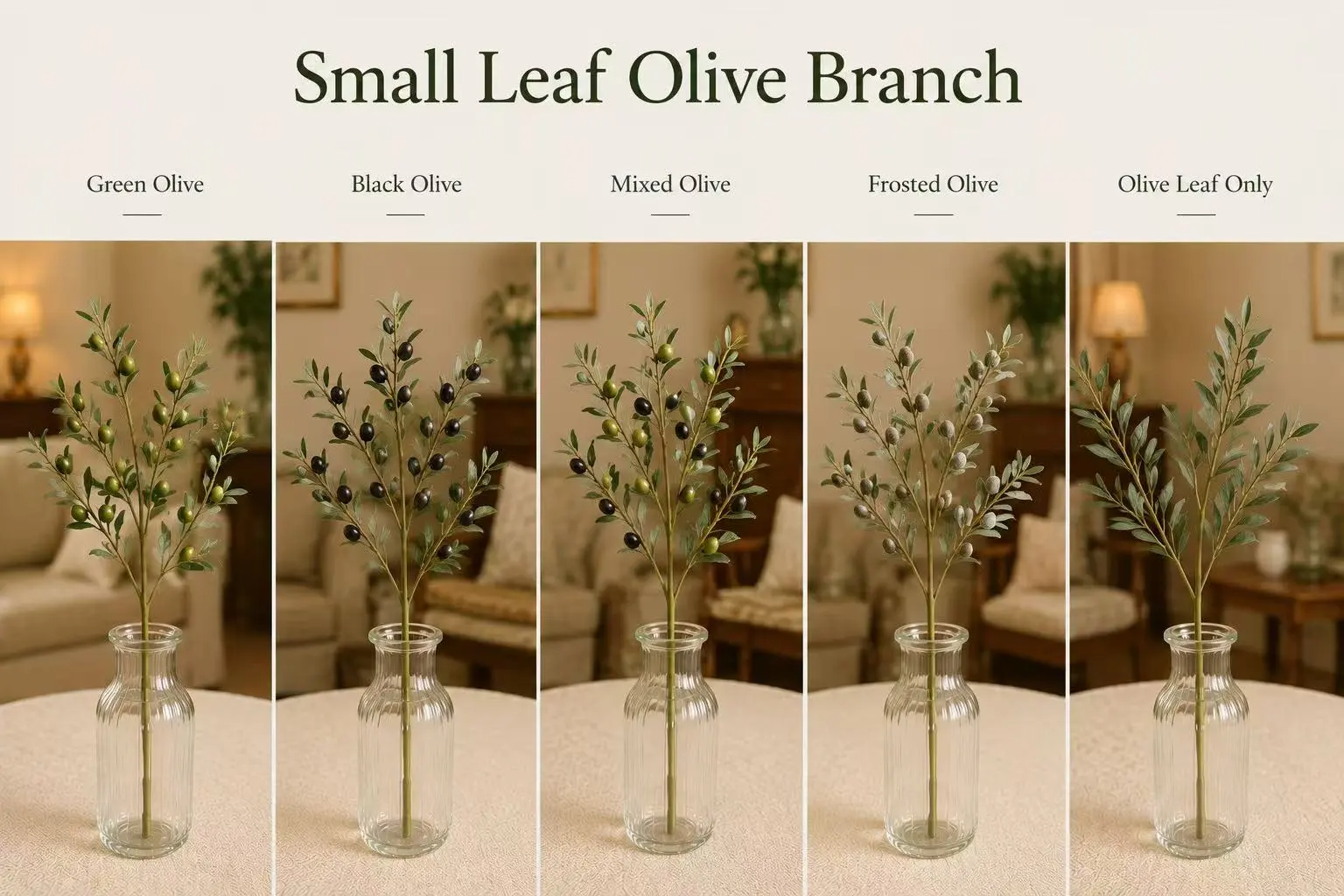
To style an Artificial Bud & Small Leaf Olive Branch, you need to choose dishes that go well with it, make sure the sizes of the spaces are balanced, and mix textures to make displays that look like real ones. The leaves on these Artificial Bud & Small Leaf Olive Branches are small, reaching 1.5 to 2.5 cm. They are made from thickened polyester silk cloth that can be shaped in many ways without breaking. Their thin twigs look great as filler in flower arrangements, as simple accents on their own, or as part of stacked sculptures. These maintenance-free Artificial Bud & Small Leaf Olive Branches come in olive green, grey green, dark green, light tender green, and vintage distressed green. They add year-round realism to retail spaces, event places, homes, and hospitality spaces.
Understanding Artificial Bud & Small Leaf Olive Branches
The main difference between Artificial Bud & Small Leaf Olive Branches and real olive leaves is how long they last and how useful they are. Natural olive trees need certain amounts of light, to be watered regularly, and to be pruned at certain times of the year. In industrial settings with controlled temperatures, the trees often lose their leaves. Artificial options get rid of these worries while still being true to nature.
What Defines Sprout Leaf Olive Branches
Sprout leaf types look like the very first stages of growth in Olea europaea. They have fine new growth and leaves that are close together. These Artificial Bud & Small Leaf Olive Branches have the silver-green undersides and soft stems that show they are healthy. The polyester silk fabric is shaped to look like a naturally curving leaf. This gives it depth and dimension that cheap plastic options don't have. This choice of material gives it important flexibility—branches can bend to fit different containers without getting stiff or breaking, which happens a lot with lower-quality goods.
Material Science Behind Realism
Layered building methods are used to make high-quality Artificial Bud & Small Leaf Olive Branches. The thicker polyester silk cloth has a matte finish that absorbs and reflects light like living tissue, so it doesn't have the shine that you can tell is made of plastic. Internal wire cores make it possible to move things around while keeping the structure strong during shipping and installation. The variety of colours used is like how chlorophyll changes naturally, with leaves showing minor changes from sage to silver based on where they are in relation to light sources.
Advantages Over Fresh and Preserved Alternatives
When olive stems are cut, they wilt within days and need to be replaced all the time in business settings. As glycerin treatments break down, preserved twigs lose their shape and become flimsy, breaking into pieces. They also change colour. Artificial Bud & Small Leaf Olive Branches keep their look no matter how often they are handled, how wet or cold it is, or how much moisture is in the air. Because they are hypoallergenic, they can be used in places like hospitals, bars, and hotels where pollen sensitivity could be a risk issue. The cost analysis is convincing—a single Artificial Bud & Small Leaf Olive Branch that lasts for years is much more cost-effective than ordering fresh flowers every week, which is especially helpful for procurement managers who are in charge of multiple sites.
How to Style an Artificial Bud & Small Leaf Olive Branch for Various Settings
To style well, you need to know about symmetry, colour theory, and the space you're dressing in when working with Artificial Bud & Small Leaf Olive Branch. These rules are useful whether you're making an installation for a hotel hallway or a show for a small shop.
Color Coordination Strategies
Olive leaves are neutral and can be used with both warm and cool colour schemes. Tones of gray-green go well with brushed metals and industrial concrete in modern offices. Tones of old, faded green go well with rustic wood furniture and terracotta pottery. Change the strength of the colours when you combine several branches. For example, to add depth, pair light soft green with darker olive tones. Don't use patterns with only one colour; they lose their visual interest. Think about the materials around the room. Sage greens look great with blush pinks and creamy whites at wedding venues, while deep olive greens ground bright jewel tones in high-end hotel restaurants.
Arrangement Styles for Different Aesthetics
Single-branch displays in cylinder glass or matte clay vessels look great in modern minimalist spaces because they let the organic shape stand out against the clean lines. The stems' natural unevenness stands in contrast to the accuracy of the architecture. In rooms with a vintage or Mediterranean feel, bigger, bushier arrangements made of several branches, dried grasses, or bleached stems in used, broken-down metal cases look great. It's easy to change the plant for each season: in the fall, add berry stems, in the spring, white flowering branches or frosted pine tips, and all year long, keep the olive base.
Step-by-Step Installation Techniques
First, measure the size of your container. For balanced layouts, the traditional design rule says that the branch height should be 1.5 to 2 times the vessel height. Use wire cutters to cut off any extra length, making clean cuts at angles to make placement easier. To make the Artificial Bud & Small Leaf Olive Branches fuller, gently bend the stems outward to make them look like natural growth patterns where leaves fan out from the main stem. For short-term event setups, secure branches with floral foam. For long-term displays, place directly in weighted containers. To change the heights, put the longer stems in the back or middle and the lower ones at an angle to the front. This adds depth that looks good from different viewing angles, which is very important in public places where people walk around a lot.
Application Across Commercial Settings
Floor-standing arrangements with 5–7 branches in large pots look great in hotel lobby installations because they add a warm, natural touch to high-ceilinged rooms. Conference rooms are good for setting up two to three stems on a desk in low, wide vessels that don't get in the way of talks. Boutiques can make seasonal scenes by putting Artificial Bud & Small Leaf Olive Branches next to items that go well with them, like linens, ceramics, or jewellery. This helps build brand stories that flow together. Wedding planners like how light it is because it can be used for installations above and decorations in arches, where fresh branches would put too much weight on pulley systems and be unsafe.
How to Choose the Best Artificial Bud & Small Leaf Olive Branch for Procurement
Quality Assessment Criteria
Look closely at the ways that leaves are attached. Instead of glue, which breaks down over time and when cleaning, premium stems use heat-bonded construction to attach the leaves. Test the flexibility of the wire by regularly bending the stems. Good internal wire cores will return to their original shape without becoming permanently deformed. Check the colour stability between batch samples, because differences in dye lots can lead to installations that don't match when multiple orders are put together. Ask for material safety approvals that say the product meets the fire-retardancy standards needed in business buildings. This is especially important for hospitality and event settings where NFPA 701 compliance is required by law.
Comparing Material Options
When it comes to reality and longevity, polyester silk cloth beats polyethylene plastic. Silk-blend leaves have natural variations in texture and move gently when air flows through them, while hard plastic leaves look fake and static. The shape process used on high-quality textile materials lets you move the product around during its lifetime, so you can adapt to new design trends without having to buy new ones. But for outdoor uses, UV-stabilized materials are needed to keep the colours from fading and the materials from breaking. Make sure you know what the suppliers' environmental exposure needs are before you finalise your specs.
Supplier Reliability Factors
Quality control methods that are written down and used by established providers show that their products are always the same. Ask for the results of a pull-strength test that shows the lowest amount of force that can be used to connect leaves and buds. Ask about lead times during busy times of the year, like the wedding and holiday seasons, when factories don't have enough workers or materials on hand. Check to see if the product can be customised if the project needs exact colour matching or bud placement patterns. Strong suppliers offer sample programs that let you see the products in person before you commit to large orders. This lowers the risk of launching new product lines in multiple places.
Caring for Artificial Olive Branches to Maximize Lifespan
Using the right care methods will protect your purchases over years of business use by increasing their useful life and keeping them looking good.
Routine Cleaning Methods
The buildup of dust dulls the surfaces of leaves and makes them look more fake. For weekly care, dust the plant gently with microfibre cloths or soft-bristle brushes, moving from the base of the stem to the tips of the leaves so as not to stress the attachment points. Compressed air dusters remove dust from thick groups of plants without touching them, which could move delicate parts. Deep cleaning should be done every three months using room-temperature water and pH-neutral soap solutions sprayed on with spray bottles. After drying in the air, keep it out of direct sunshine, which fades colours faster.
Storage and Handling Protocols
Keep leaves in climate-controlled spaces to keep them from breaking down in high temperatures. To keep their shapes while they're not in season, branches can be hung upright or laid flat with a protected covering. Do not squeeze several branches together, as this causes lasting creasing in synthetic materials. Transport branches in rigid crates that have enough support inside, since shipping damage is a major cause of quality issues in business orders. Give clear directions on how to handle Artificial Bud & Small Leaf Olive Branches to installation teams that aren't familiar with them. Bad techniques, like pulling or twisting too much, can damage the wire structures inside.
Troubleshooting Common Issues
Using soft steam is a good way to treat twigs that are flat or don't have the right shape. Hold stems 12 inches away from sources of steam to let the heat relax the polyester fibres. While the stems are still warm, bend them. When colours fade, it's usually because the material has been exposed to UV light for longer than it was designed to handle. Move screens out of direct sunlight or replace them with ones that are UV-stabilized. When buds or leaves come off, it means the glue has failed, and you need to file a warranty claim with the source if it happens within an acceptable amount of time. Take pictures and keep track of your purchases to show proof of these problems and back calls for replacements.
The Symbolism and History Behind Olive Branches in Business and Decor
Understanding the meanings of things in different cultures makes them more useful in business, turning meaningless decorations into important brand messages.
Cultural Origins and Evolution
Ancient Greeks and Romans saw olive trees as holy symbols of Athena and success, and they used woven olive wreaths to crown winners. According to the Bible, olive leaves were given to God as peace gifts after the flood. These connections were kept alive in Renaissance art and in current political art. For example, the United Nations emblem is made up of olive branches around a world map. These deep-seated connections are used in modern interior design, where olive branch patterns unconsciously send messages of security, wealth, and harmony.
Application in Corporate Branding
Companies in the fields of conflict settlement, healthcare, hospitality, and sustainability use images of olive branches on purpose to support their core values. In the greeting areas of law firms, olive trees are used to show that they are good at negotiating and finding peaceful solutions to problems. In order to bring to mind traditional Mediterranean medicine, wellness centers use plants from that area. Hotels that want to attract high-class vacation travellers use a lot of olive branches to create a Tuscan-style look that appeals to people who want to live an ideal life. These uses work because cultural symbols work without us being aware of them, affecting our emotions before we can think clearly about them.
Conclusion
Artificial Bud & Small Leaf Olive Branches are highly realistic copies of real plants that work well in a wide range of situations. Their small 1.5-2.5cm leaves, flexible polyester silk construction, and maintenance-free operation solve problems that keep coming up in the event, retail, hotel, and interior design industries. To do execution right, you need to know about the properties of the materials, how to style them, how to evaluate suppliers, and how to do upkeep. The cultural significance makes them more useful, which lets smart designers make places that are important to people who live or visit, going beyond just looks.
FAQ
How realistic do artificial olive branches appear in upscale environments?
With thicker polyester silk cloth and multi-tonal colour treatments, premium Artificial Bud & Small Leaf Olive Branches look like real plants and can be used in high-end business settings. The matte finish of the material gets rid of the plastic sheen, and the bendable stems make the movement look natural. These branches can stand up to close study in high-end stores and hotel lobbies, where cheaper options would hurt the design.
Can branches be customized for specific color schemes or branding requirements?
Reliable sellers offer customisation services that are tailored to each customer's needs. Cloud Floral Art offers a range of colour schemes, including olive green, grey green, dark green, light soft green, and old distressed green. They can also create custom colours for large orders. You can change the length of the branches, the number of leaves, and the way that branded gift sets are packaged.
What cleaning products work best without damaging the materials?
Soap solutions that are pH-neutral and diluted in water that is room temperature can safely clean polyester silk cloth or wire cores without breaking them down. Do not use harsh chemicals, cleaners with bleach, or rough tools that remove protected layers. Both microfibre rags and soft-bristle brushes are good for cleaning, and the materials will stay strong even after years of industrial use.
Partner With Cloud Floral Art for Premium Artificial Olive Branch Solutions
As a specialised maker of Artificial Bud & Small Leaf Olive Branches, Cloud Floral Art works with buyers in the retail, business design, event planning, and hotel industries. The Artificial Bud & Small Leaf Olive Branches we sell are both incredibly lifelike and very long-lasting. They are made of thickened polyester silk, which keeps their look even after years of hard business use.
We offer full customisation services, ranging from matching colours to current design themes to creating custom arrangements for branded installations. Our efficient production capacity also makes sure that orders are delivered on time during busy holiday times. Our quality control systems make sure that each batch is made the same way every time. This gets rid of the colour variations and inconsistent skills that can ruin big projects. As a seller that has sold goods to foreign markets before, we know the rules about how to handle logistics and get certifications for cross-border purchases.
Email our team at guoh91278@gmail.com to talk about the details of your project, ask for samples, or look into large price options that are tailored to the amount you need to buy. We want interior designers, buying managers, and event planners to see what makes Cloud Floral Art different—where plant realism meets business dependability.
References
1. Anderson, M. (2021). Artificial Botanicals in Commercial Interior Design: Material Science and Application Strategies. New York: Design Press International.
2. Chen, L., & Roberts, K. (2022). Sustainable Hospitality: Long-Term Value Analysis of Artificial vs. Natural Decorative Elements. Journal of Hotel Management Research, 18(3), 112-128.
3. Davidson, S. (2020). The Psychology of Biophilic Design: How Artificial Greenery Influences Commercial Space Perception. Boston: Environmental Psychology Institute.
4. Mitchell, R. (2023). Procurement Best Practices for Artificial Floral Products: Quality Assessment and Supplier Evaluation. Chicago: B2B Supply Chain Publications.
5. Thompson, J., & Liu, H. (2022). Cultural Symbolism in Corporate Design: The Enduring Appeal of Mediterranean Botanicals. International Journal of Brand Strategy, 9(2), 45-61.
6. Williams, E. (2021). Event Design Logistics: Weight, Safety, and Aesthetic Considerations in Temporary Installations. Los Angeles: Professional Event Planners Association.
Online Message