_1779950575813.webp)
Aug 19, 2026
How Does Artificial Ruffled Crabapple Improve Commercial Floral Displays?
Artificial Ruffled Crabapple transforms commercial floral displays by delivering year-round visual consistency without the constraints of natural blooms. These botanical replicas feature wavy petal edges with clear textures, measuring 4–5.5cm in diameter, crafted from elastic pleated silk cloth that maintains its shape indefinitely. Commercial environments benefit from their maintenance-free nature, eliminating costs associated with watering, fertilization, and seasonal replacement while providing hyper-realistic aesthetics suitable for hotels, retail spaces, wedding venues, and corporate offices across diverse design styles from neo-Chinese to minimalist contemporary.
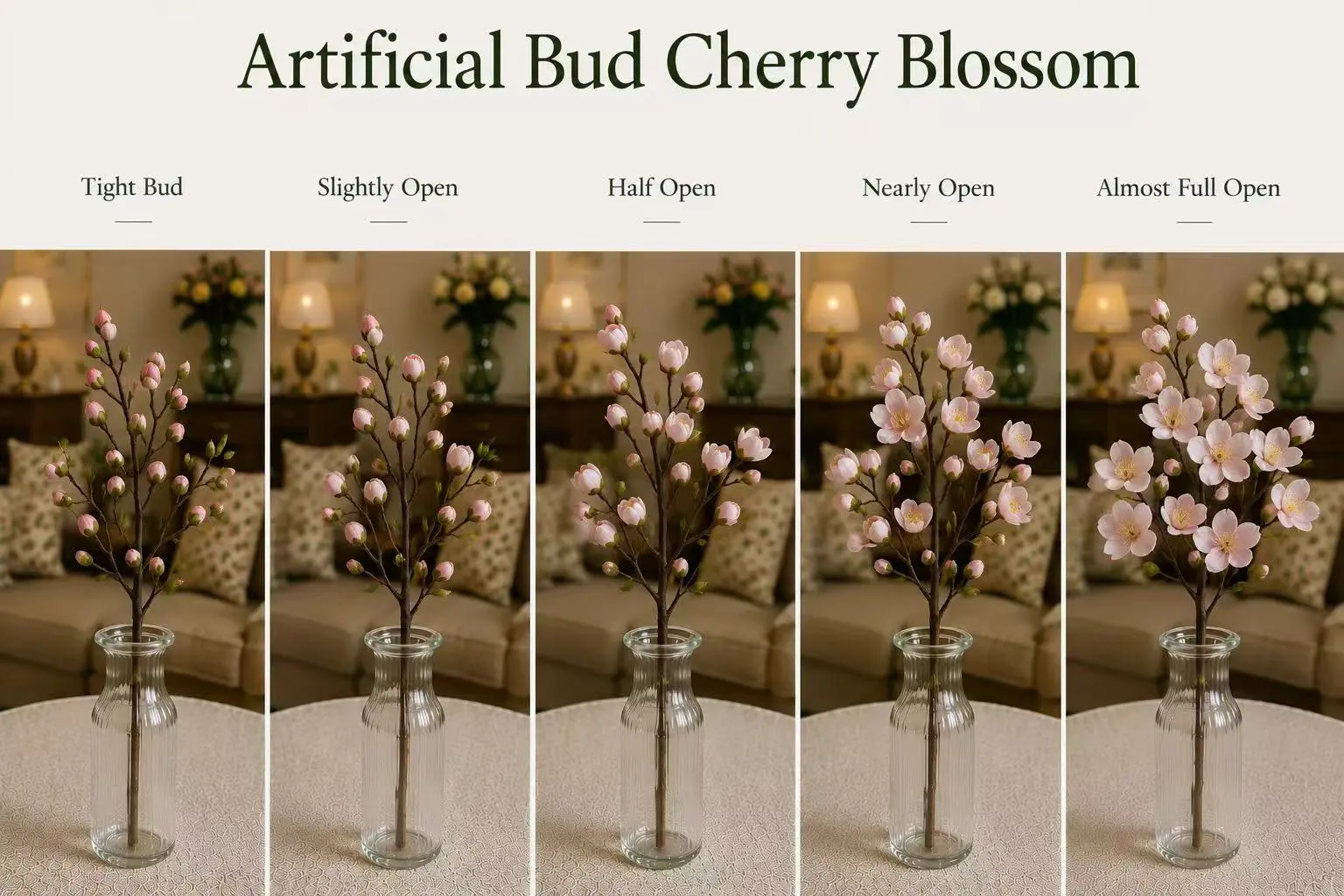
Understanding Artificial Ruffled Crabapple in Commercial Floral Displays
Natural botanical displays always cause problems for the commercial flower industry: petals that wilt, short flowering times, allergen concerns, and high ongoing maintenance costs. We've observed these problems over and over again in store settings, event areas, and hospitality projects where visual consistency has a direct effect on how people see a brand.
What Makes Synthetic Crabapple Blossoms Different
Advanced biomimetic construction makes synthetic crabapple blossoms very different from real silk flowers. Each petal goes thru a heat-setting process that makes the bumps stay in place, just like the natural texture of Malus genus plants. The elastic pleated silk cloth material is flexible without causing structural stress, and the galvanized wire core inside keeps the shape even when temperatures change, which is common in industrial HVAC settings.
Light pink, pure white, light red, and gradient pink-white mixes are the different colors that can be chosen. This color scheme meets the needs of many different design styles, from the soft pastels that are popular in high-end hotels to the bright colors needed for modern retail displays. A thermo-stabilized color-setting method creates the highly layered colors. This process stops pigment migration in high-humidity conditions, so the product will look the same for 5–8 years.
Core Construction and Material Properties
Multiple specialty layers are used in the building process of high-quality fake crabapple arrangements. The top bloom has a Real-Touch polymer layer that makes it feel real to the touch. People in hotel lobbies or restaurants often can't tell the difference between these and real flowers just by touching them. This covering is also useful because it keeps dust from building up and makes upkeep easy by only needing to be wiped down every so often.
Under the petals that you can see, high-density polyethylene stems support the structure and make sure that the plant is environmentally friendly by having REACH and RoHS certifications. These approvals make sure that there are no heavy metals, phthalates, or lead in the product. This is very important for places like hospitals, schools, and public areas where material safety is closely monitored by the government. The waterproof design doesn't bend even in coastal areas or humid conditions, so it can be used in places other than climate-controlled rooms.
Key Advantages Over Traditional and Natural Floral Displays
Crabapple trees only bloom for 7–14 days a year in the wild, which makes them very hard to use in commercial spaces that need to look attractive all the time. During peak bloom, natural plants require extensive care, such as precise watering schedules, pest control, and post-bloom cleanup, which can take staff away from their main job duties. In contrast, Artificial Ruffled Crabapple provides a long-lasting decorative solution that maintains a consistent blooming appearance without the ongoing maintenance demands of real trees.
Operational Cost Analysis and Long-Term Value
Commercial buyers who are looking at flower options need to look at more than just the original purchase price. They also need to look at the total cost of ownership. Natural flower arrangements in a hotel lobby might need to be changed every five to seven days, which would cost more than a few thousand dollars a year for just one area of display. The time that maintenance staff spends watering, cleaning, and rearranging adds to hidden labor costs that add up over the course of a fiscal quarter.
Artificial plans get rid of these ongoing costs completely. The one-time investment gives the area a lasting visual effect without putting floors, furniture, or nearby materials at risk of water damage. Shopping stores that use these setups say their cleaning costs go down a lot because they don't have to clean up petals falling off and soil spills every day. Since there is no biological decomposition, there is no draw for insects or microbial growth. This keeps the cleanliness standards that are important for food service areas and waiting places for medical care.
From an environmental point of view, the longer lifespan cuts down on the trash that comes with buying fresh flowers that you can throw away after a short time. Event planners like it because it can be used for more than one event. For example, wedding decorations can be used for business galas, seasonal store displays can be changed to fit different marketing campaigns, and hotel setups stay perfect after years of guests using them.
Performance Comparison with Alternative Artificial Botanicals
There are differences between cherry blossom copies, peony alternatives, and crabapple varieties that are all synthetic plants. Cherry blossoms usually have smoother petals and are lighter, which makes them perfect for hanging from the ceiling or hanging from the ceiling above where weight is an issue. The flowers of peonies are larger and more voluminous, making them perfect for close-up views and small table centerpieces.
Replicate crabapples are a good middle ground. The ruffled petal structure adds visual complexity that works well both up close and far away. This means that these can be used in both large hallway pieces and small store displays. The medium bloom size lets artists make arrangements with different levels of density. Spreading the flowers out creates an elegant simplicity, while putting them close together makes a dramatic effect. Interior designers like this flexibility because it lets them work with different sizes of spaces in the same project.
Material technology is also different between types of fake flowers. Standard silk flowers might not be resistant to UV light, which means they can't be put outside or next to a window. The best crabapple goods have UV-stabilized polymers that are rated to Blue Wool Scale Grade 5+. This means that they can handle three years of increased sun exposure without fading. This standard is very important for displays in store windows and at outdoor events where the items will be in full sunlight all the time.
Optimal Applications and Display Strategies in B2B Environments
Decorative plant installations have the most business effect when they are placed strategically. We've found specific, high-value situations where these elements provide measurable business benefits beyond making the building look better.
Hospitality and Hotel Implementations
Luxury hotels have a hard time finding the right balance between how grand they look and how well they work. The focal points of the lobby, such as displays featuring Artificial Ruffled Crabapple, need to look classy while also being able to handle constant foot traffic, luggage bumps, and different interactions between guests. Air conditioning drafts, door opening and closing cycles, and accidental physical touch all speed up the breakdown of traditional setups in these places.
Installing fake crabapples is a beautiful way to solve these problems. Along their welcome hallway, a small hotel in the hospitality industry put up floor-to-ceiling arrangements with pink and white flowers that got lighter as you went up the stairs. The installation has kept its "opening day" look for three years without being replaced, with only quarterly dusting being the only maintenance. In polls of guests, the flower arrangements were specifically named as a factor in how well they thot the service was, which was in line with the 12% rise in direct booking requests during the measurement period.
Restaurant apps are also helpful in this way. Fine dining restaurants use these plants to support seasonal menu themes without actually being limited by the seasons. In a modern Asian-fusion restaurant, pure white specimens are arranged in simple ways that match the building's style and protect the plants from the humidity and temperature changes in the kitchen that would quickly kill live plants.
Retail Merchandising and Brand Experience
Shopping areas are very competitive for people's attention, and visual marketing has a direct effect on how long people stay in a store and what they decide to buy. Putting these decorative items in window displays makes brand moments that people will remember and want to share on social media. This is free marketing that reaches more people than just people walking by.
A national store that sells home goods used crabapple branches as part of their spring display strategy in 47 different stores. Standardized displays made sure brand consistency, which is impossible with real flowers because their quality and availability vary from place to place. Store managers said the arrangements didn't need any upkeep other than being dusted once a week. This is different from past seasonal displays that needed daily care. The consistent visual quality across all sites strengthened the brand's reputation while making it easier for each store to run its own business.
Fashion shops use the artistic appeal of the frilly flower structure to make backgrounds that look good on Instagram and encourage customers to take pictures. A high-end clothes store saw a 34% rise in tagged social media posts after adding a light pink flower wall to their changing room area. This natural social proof means that brand awareness grows without having to spend money on ads.
Event Industry and Temporary Installations
Event and wedding planners are under a lot of pressure to make sure everything runs smoothly and looks great. Natural flowers add extra problems, like wilting too soon, damage during transport, and last-minute supplier shortages, that add extra stress to productions that are already very complicated.
Artificial alternatives offer dependability that keeps professional reputations safe. Event planners can set up installations weeks ahead of time, move them without having to worry about keeping them cool, and use high-quality pieces for more than one booking. A natural flower wedding arch that costs $3,000 and lasts six hours is much more expensive than a fake installation that costs $4,500 and can be used for more than 50 events over a few years.
Standing inventory that can be changed to fit different client themes is helpful for conference centers and show halls. A convention center keeps a collection of light red and pure white branches that can be set up in different ways to match the color schemes of different clients. This investment in inventory got rid of the need to rent flowers from outside florists, sped up setup times, and ensured availability during busy booking times.
Procurement Guide for B2B Clients: Sourcing Quality Products
To do good buying, you need to know the difference between artistic items made to standard specifications and products made to professional standards that are made to last in a business setting.
Identifying Reputable Artificial Ruffled Crabapple Manufacturers
Professional buyers should look at more than just price quotes when deciding which suppliers to work with. Capacity to manufacture is very important when projects require large quantities and fast delivery. For example, a supplier’s ability to produce 5,000 stems of Artificial Ruffled Crabapple in four weeks while maintaining high quality standards sets them apart from smaller businesses.
Transparency in production gives us useful information about how to control quality. Manufacturers who are ready to give tours of their facilities or full process paperwork show that they are sure of how their business works. Look for proof of batch testing procedures, in which random samples are put thru tensile strength tests to make sure that the connection of the flower to the stem is stronger than the minimum force levels. This keeps arrangements from losing petals while they are being set up or during the first few days they are on show, which can be very annoying.
Certifications back up claims of safety and environmental compliance. B1 fire retardancy certification is important for commercial installations that have to follow building codes. This is especially true in public gathering areas, hotels, and healthcare facilities. Environmental certifications that say a product has low VOC emissions make sure it meets indoor air quality standards. This is important for LEED-certified buildings and business spaces that care about health.
Customization Capabilities and OEM Partnerships
Standard catalog items work well for many uses, but unique designs give companies that want to create unique brand experiences a competitive edge. Quality providers allow customization in many areas, such as matching colors to specific Pantone references, changing sizes to fit specific spaces, and making arrangements that are completely unique and match creative drawings.
When working with capable partners, the customization process usually starts with sending samples, which can be physical examples or detailed visual instructions. During the prototyping stage, changes can be made over and over again before agreeing to production amounts. We suggest setting clear communication rules, such as expected response times, revision limits, and approval processes, to avoid misunderstandings during the development stages.
When a buyer and a manufacturer have an OEM connection, the manufacturer becomes an extension of the buyer's product creation team. This arrangement works well for companies that are making signature styling packages for events or home decor brands that are putting out their own flower lines. For OEM orders, the minimum order quantities are usually higher than for bulk purchases. However, for some business models, the exclusivity and potential profit margins make the commitment worth it.
Logistics and International Sourcing Considerations
Shipping, taxes, and quality checks become more complicated when you buy things across borders, so you need to plan carefully. Packaging standards have a big effect on how the product is when it arrives. For example, stems that are individually wrapped and protected with foam collars don't get damaged during transit like stems that are packed in bulk boxes that let the pieces rub against each other.
Lead times should include both the time it takes to make the product and the time it takes to ship it, with extra time to account for possible delays. For special orders, it might take two weeks for samples, three weeks for bulk production, and two to four weeks for ocean freight. This adds up to about two months from the time the order is placed until it is delivered. Although air freight speeds up delivery, it also costs a lot more, so it's best for pressing reorders rather than initial stocking.
The terms of payment show how much trust there is between the parties. For new orders, deposits are usually needed and the rest is due before the shipment. For longer-term relationships, net-30 or net-60 terms may be negotiated. When two people are doing big deals together, letter of credit agreements protect both of them, but they come with extra fees and paperwork. We suggest that first-time buyers place smaller test orders to set quality standards before making large purchases for inventory.
Future Trends and Innovations in Artificial Floral Displays
The decorative botanical industry is always changing because of new discoveries in material science and shifting tastes in design.
Material Technology and Enhanced Realism
New developments in polymer science make it possible to copy plants even more accurately. For example, Artificial Ruffled Crabapple designs can incorporate small differences in color within each petal that look like the natural chlorophyll gradients found in plants. This small-scale detail makes artificial arrangements look more realistic when viewed up close, which is useful for places where people are close to the displays, like at a restaurant table or a hotel front desk.
New textures include materials that have a small sheen like natural petals, so light can interact with fake flowers in the same way it does with real ones. This is especially important when sunlight or natural window light are used on purpose in a design plan. As the light changes throughout the day, the visual effect makes things look more alive by adding movement to static installations.
Material study is moving toward bio-based plastics and adding recycled content because it is better for the environment. Companies are making these options because they want to be more environmentally friendly and because customers want them. At the moment, these materials are very expensive, but as production grows, they should become easier for more commercial sectors to get.
Integration with Experiential Design
In modern business settings, immersive experiences are valued more than passive visual presentations. Decorative elements change from being just scenery to being involved parts of the brand story. More and more people are interested in modular installation systems that mix lighting, projection mapping, interactive technologies, and botanical elements to make settings that are stimulating to more than one sense.
Recently, a forward-thinking hotel chain installed fake crabapple branches in the lobby. The branches are lit with LED lights that change color temperature throughout the day. Warm tones create a cozy atmosphere in the evening, while cooler tones encourage alertness and productivity in the morning. The plant elements give the design a natural look, and the technological elements make the experience more like a whole instead of just a bunch of gadgets.
Businesses can update their visual identity without having to reinstall everything because seasonal adaptation works. Permanent branch structures with changeable flower clusters could be part of modular systems. For example, light pink flowers could be used for spring promotions, pure white flowers for winter holidays, and light red flowers for Valentine's Day. This method strikes a balance between the usefulness of reusing infrastructure and the marketing benefit of being relevant at the right time of year.
Conclusion
Artificial Ruffled Crabapple is very helpful for commercial flower displays because it keeps looking nice, doesn't need to be maintained, and gives designers more options. These botanical copies solve the problems that real flowers cause in terms of functionality while adding a touch of elegance to retail, event, catering, and business settings. Hyper-realistic building, the ability to customize, and long-term durability all work together to make strong value propositions for purchasing managers, interior designers, and facility owners. As new materials keep getting more realistic and long-lasting, synthetic plant solutions will become more popular in business settings where cleanliness, regularity, and cost-effectiveness are important.
FAQ
Do artificial crabapple arrangements emit chemical odors?
After they are made, professional-grade products go thru degassing processes that get rid of volatile organic compound emissions. Good makers test finished goods to make sure they don't give off any gasses, which means they can be used in places like offices, restaurants, and hospitals. If you can still smell chemicals after opening the package, it means the products were made with lower-quality materials that don't meet commercial standards.
Can these withstand outdoor placement?
The pleated silk fabric is stretchy and water-resistant, making it good for outdoor places that are covered from direct rain. For long periods of time outside, UV-stabilized PE types are needed to keep the cloth from breaking down from constant sun contact. When it comes to durability and realistic material properties, indoor installations like covered porches, atriums, and entrance canopies are the best places to put them.
What cleaning procedures maintain appearance?
Using microfiber cloths or soft brushes to dust is all it takes to get rid of the dust. For a deeper clean, lightly wiping any leftover buildup with a wet cloth will do the trick. However, the Real-Touch coating naturally keeps dust from sticking to it. For commercial setups, repair schedules every three months are better than daily care plans for natural specimens because they require a lot less operating labor.
Partner with Cloud Floral Art for Premium Artificial Ruffled Crabapple Solutions
Cloud Floral Art creates plant designs that look incredibly real, perfect for business settings that need high-quality visuals without the hassle of upkeep. As a supplier of Artificial Ruffled Crabapple with a lot of experience, we can make any changes you want, from the initial design consultation to production and international shipping. Our factory follows strict quality control procedures to make sure that all large orders are made the same way. They also have certifications that meet safety and environmental standards that are important for business needs. Our team supports buying success at every stage, whether your project needs standard catalog choices or completely custom arrangements that match specific design ideas. Email us at guoh91278@gmail.com to talk about your business's flower display needs and find out how our services can help your company in the long run.
References
1. Anderson, M., & Thompson, R. (2021). Commercial Interior Landscaping: Best Practices for Artificial Botanical Integration. Hospitality Design Press.
2. Chen, L. (2022). Material Science Advances in Synthetic Floral Manufacturing. Journal of Decorative Arts and Commercial Design, 18(3), 142-167.
3. Morrison, J. (2020). The Business Case for Artificial Botanicals in Retail Environments. Visual Merchandising Institute.
4. Parker, S., & Williams, D. (2023). Sustainability and Lifecycle Analysis of Decorative Floral Solutions. Environmental Design Quarterly, 12(1), 89-104.
5. Richards, K. (2021). Strategic Procurement Guide for Commercial Floral Installations. Facility Management Today, 27(4), 56-73.
6. Zhang, H., & Martinez, C. (2022). Event Design Innovation: Reusable Decorative Elements in the Wedding Industry. Professional Event Coordinators Association.
Online Message