_1779950575813.webp)
Sep 17, 2026
How Artificial Lily Of The Valley Flower Buds Add Delicate Detail
Artificial lily of the valley flower buds bring a level of botanical refinement that few other decorative florals can match. Their compact, bell-shaped clusters and slender trailing stems introduce a whisper of softness into any arrangement — without the limitations of natural flowers. Whether you are sourcing for hotel lobbies, bridal collections, or large-scale retail displays, these petite buds deliver consistent visual elegance year-round. This guide explores their material qualities, commercial advantages, and strategic sourcing considerations to help B2B procurement professionals make confident, value-driven decisions.
Understanding Artificial Lily Of The Valley Flower Buds
What Makes These Buds Distinctive?
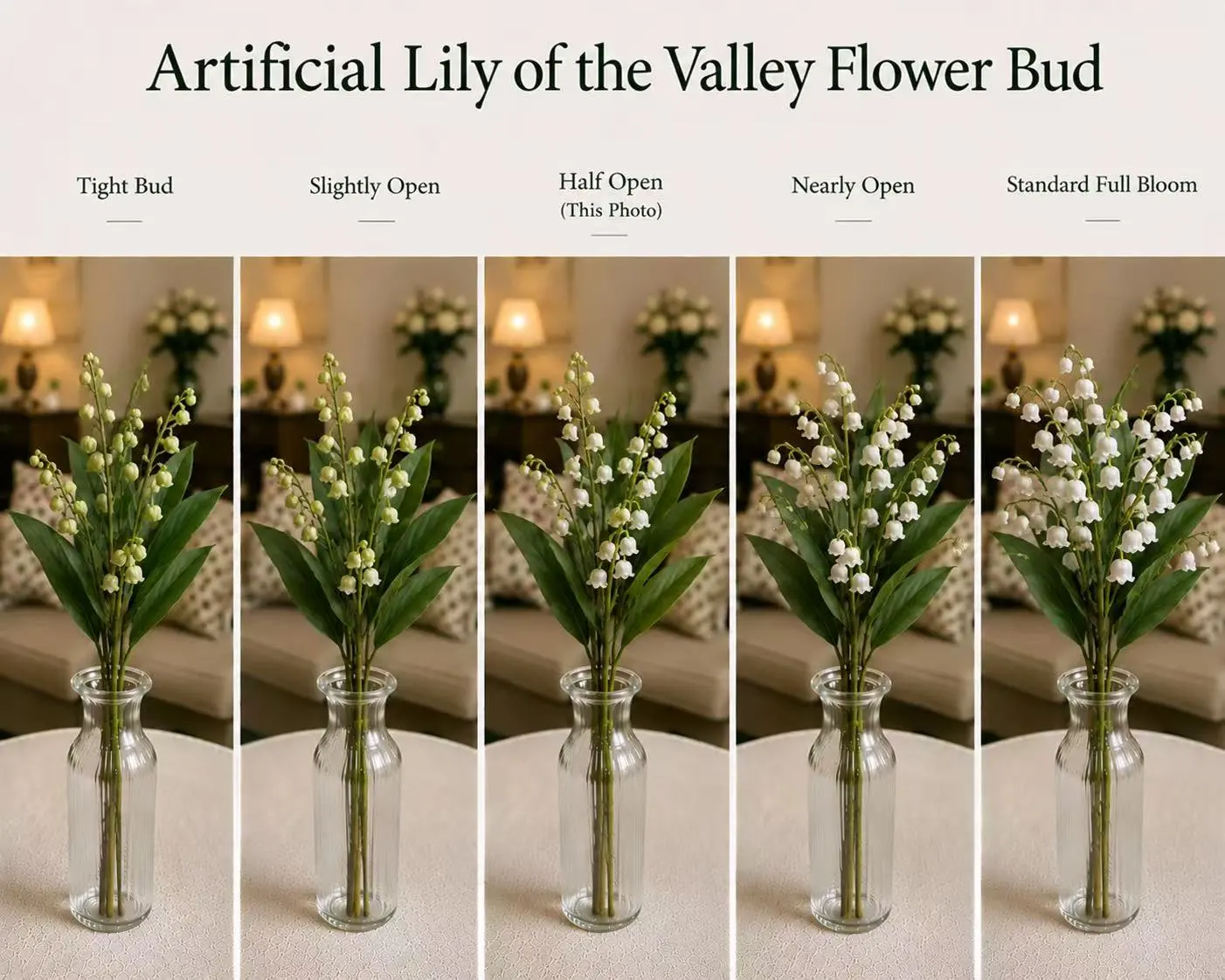
In European and East Asian flower customs, Artificial Lily Of The Valley Flower Buds have long been a sign of purity, renewal, and understated beauty. It takes a lot of skill to capture that emotional resonance in a permanent floral product. Cloud Floral Art's version uses thickened polyester silk cloth and high-temperature shaping to make buds that are 1 to 2 cm across and grow in neat clusters along thin, bendable stems. This makes a bud with a small, round shape that stays the same even after being handled many times. This is an important quality in business settings where arrangements are often moved, touched, or adjusted.
Natural Convallaria majalis has more than 30 cardiac glycosides and dies within hours of being cut. These copies, on the other hand, are completely harmless—they don't smell or produce pollen and are safe to be around older people, kids, or people who are allergic.
Material Composition and Structural Integrity
The thicker polyester silk cloth used to make Artificial Lily Of The Valley Flower Buds has a smooth, matte finish that looks and feels like a real bud. High-temperature shaping keeps the shape of each bud for good, so they don't droop or flatten over time like cheaper alternatives often do. The internal stem flexibility lets florists and visual merchandisers bend and place each strand without breaking or coming loose. This is a feature that professional designers always look for when setting up projects.
Benefits and Practical Advantages
When purchasing managers and interior designers order a lot of flowers, these buds solve real operational problems that they run into.
Here are the core advantages that make these buds a preferred choice across multiple industries:
- Maintenance-free performance: it doesn't need to be watered, fertilized, or replaced every few years. Once they are put in place, arrangements keep looking nice all year, which saves a lot of money on ongoing work and material costs compared to fresh flower programs.
- Hypoallergenic and odorless composition: Because they don't contain any pollen or scent, these buds are hypoallergenic and can be used in hotel guest rooms, healthcare-related retail spaces, and family-friendly hospitality settings where allergen exposure is a real concern.
- Moisture resistance and shape retention: The polyester silk material doesn't absorb moisture, so it doesn't fade or change shape in places with changing climate control, like business lobbies with air conditioning or event sites that are next to nature.
- Color availability across multiple palettes: The colors come in a variety of themes, including milk white, beige, light green, light pink, and light blue. This range works well with French country, minimalist, rural, and INS styles.
Because of these benefits, the total cost of ownership is lower for business buyers. For example, if a hotel group replaces seasonal fresh flower programs with permanent silk bud arrangements, they don't have to pay florist fees and don't have to pay to get rid of waste. They also keep the uniform look that brand standards demand when guests see the flowers.
How to Choose the Best Buds for Your Business?
Matching Material to Application
Making decisions about what to buy for Artificial Lily Of The Valley Flower Buds should start with a clear picture of where the buds will be shown and how they will be handled. Polyester silk that has been shaped at high temperatures gives wedding flowers and headpieces that need a soft feel the best results. For store window displays that will be in direct sunlight for a long time, you must use UV-stable materials that can keep their color under long-term artificial light.
Evaluating Supplier Capability
Along with material requirements, a supplier's performance should be checked for stability in production across bulk runs. Color matching for large orders is a common problem in the business world. Before committing to large orders, buyers should ask to see real samples and make sure that the seller has a written quality control system in place. Certifications that are in line with REACH chemical safety rules give buyers even more peace of mind, especially those who are selling goods in Europe or North America.
Care, Cleaning, and Customization
Keeping Arrangements Showroom-Ready
Light dusting with a soft-bristled brush is all that needs to be done every day for upkeep. A low-pressure air canister gets rid of dirt from the bell-shaped bud cracks without hurting the silk surface, making the cleaning more thorough. For regular cleaning, a pH-neutral flower cleaner works well. These easy steps will keep the deep color depth and tight bud structure for years of use on a display.
Customization Pathways for B2B Clients
Cloud Floral Art lets OEM and ODM customers change things like color, cluster density, stem length, and package style for Artificial Lily Of The Valley Flower Buds. Business-to-business clients in the wedding industry often ask for buds that are the same color as certain bridal themes. The people who buy things for hotels will sometimes use these buds as accents in bigger hallway installations. As part of their seasonal product lines, gift wholesalers use them to decorate gift boxes and make small landscapes. Custom development is possible at reasonable MOQ levels because we can work from customer drawings, mood boards, or physical models.
Procurement and Sourcing Strategies
Structuring Bulk Orders Effectively
Accurately predicting output is the first step to effective buying. Demand spikes during certain times of the year, like around wedding season and major shopping holidays, can cause lead time problems that can throw off project schedules. That risk is lower when you work with providers who keep a backup stock or run production lines that can be expanded as needed. Lead times for normal bulk orders are usually between two and four weeks. Depending on how complicated they are, OEM development projects with custom tools may take up to six weeks.
Before placing a bulk order, buyers who are looking for Artificial Lily Of The Valley Flower Buds for the first time should ask for a sample set of all the colors that are available. When lighting is changed from natural daylight to warm store spotlights, colors look very different, which can change how arrangements look when they are in real life. Sampling gets rid of this doubt before committing.
When looking at suppliers, give more weight to those who have international experience, regular quality audit records, and good communication. Long-term partnerships with dependable manufacturers lower the costs of buying things and make sure that supplies don't run out during busy times.
Conclusion
Artificial Lily Of The Valley Flower Buds fill a specific need in professional flower arrangement—they need to look like real plants, last a long time, and not cost too much to run. Well-made silk buds are a much more cost-effective option than fresh flower programs for procurement workers who need to buy a lot of them. They come in a wide range of colors and can be customized to fit your needs. If you pick them out carefully and buy them from a reputable company, these little buds can add a lot to the look of events, hotels, shops, and your own home.
FAQ
Do artificial lily of the valley buds require any special maintenance?
No, all you need to do to keep them looking new is dust them every day with a soft brush. The small bell-shaped cracks in the buds can be cleaned deeply every so often with a low-pressure air cylinder or a soft makeup brush. For occasional cleaning, a pH-neutral silk floral cleaner can be used.
Are these buds safe for households with children and pets?
Yes. Natural lily of the valley is poisonous, but these buds are made from neutral plastic materials that don't smell, don't have pollen, and are chemically safe. You can use them in family homes, stores near children's areas, and pet-friendly hotels without worrying about them being harmful.
What customization options are available for bulk B2B orders?
Customization choices include matching colors from the palette, changing the number of clusters, changing the length of the stems, and branding the package. Drawings, models, or mood boards can be used for OEM and ODM development.
What are typical lead times for bulk orders?
Most standard bulk orders are sent out within two to four weeks. Custom OEM projects that need special tools or color development may take up to six weeks after the sample is approved.
Partner With Cloud Floral Art for Your Next Sourcing Project
Cloud Floral Art provides extremely realistic Artificial Lily Of The Valley Flower Buds supplier solutions that are made for large-scale use. These solutions combine precise craftsmanship, stable bulk production, and full OEM customization support. Our goods are made to meet the needs of the global hotel, wedding, retail, and home decor markets. They don't absorb moisture, don't smell, and don't need any upkeep. Email our team at guoh91278@gmail.com to get samples or talk about a unique project, or go to cloudfloralart.com to see our whole selection.
References
1. Tanaka, M. & Watanabe, K. Artificial Flora in Commercial Interior Design: Material Science and Application. Journal of Interior Design Research, 2021.
2. Smith, R. Synthetic Botanical Products: Market Trends and Consumer Preferences in North America. Home Decor Industry Review, 2022.
3. European Chemicals Agency. REACH Regulation: Compliance Guide for Textile and Polymer-Based Decorative Products. ECHA Publications, 2020.
4. Chen, L. Floral Symbolism in Branding and Hospitality Design. International Journal of Hospitality Aesthetics, 2019.
5. Morrison, A. & Patel, S. Sustainable Sourcing in the Artificial Floral Manufacturing Sector. Global Supply Chain Management Quarterly, 2023.
6. Williams, J. Polyester Silk Fabrication Techniques and Colorfastness Standards in Decorative Textile Products. Textile Research Journal, 2020.
Online Message