_1779950575813.webp)
Jul 13, 2026
High Quality Artificial Standard Full Bloom Peony Supplier
When procurement professionals look for an Artificial Standard Full Bloom Peony, they want more than just a pretty flower. They need a manufacturing partner that can deliver consistency, realism, and operational reliability. Fresh flowers have a lot of problems, like dying quickly, changing prices with the seasons, and needing a lot of care. These high-quality botanical copies are a smart answer to those problems. By choosing a good supplier, you can be sure that the products your business gets will look good even after years of use and will meet safety standards that are important for retail, hospitality, and event settings. To turn artificial peony sourcing from a one-time purchase into a competitive advantage for your brand, this guide walks you through the technical issues, criteria for evaluating suppliers, and buying strategies.
Understanding Artificial Standard Full Bloom Peonies
Defining the Standard Full Bloom Peony
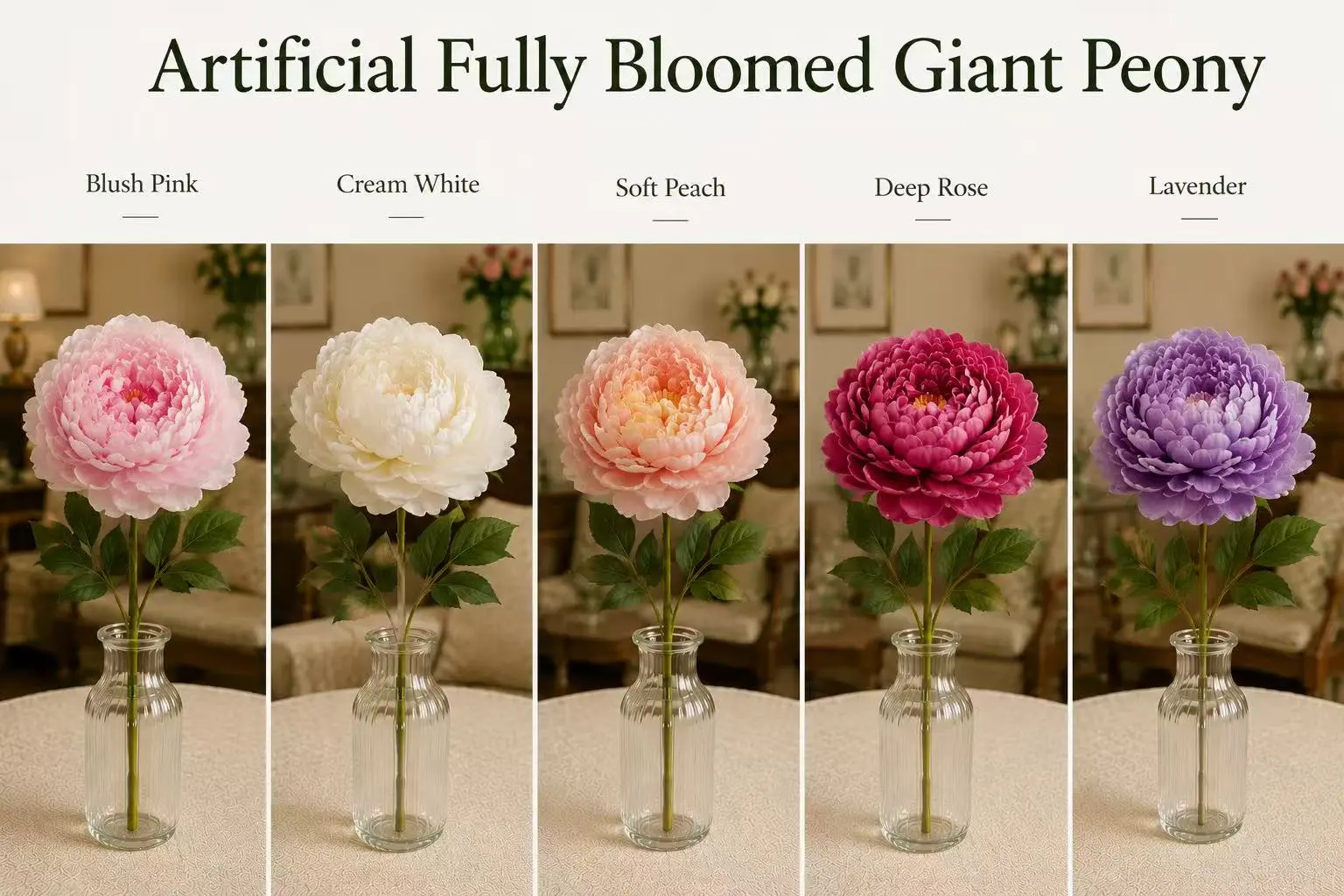
An Artificial Standard Full Bloom Peony looks just like a real Paeonia at its peak anthesis stage, when all of its petals are fully opened up and stretched out in different directions. In business-to-business settings, "Standard" refers to certain building requirements, such as a flower diameter of 13–16 cm, at least 80 petals arranged in graduated tiers, and accurate placement of the stamens based on anatomy. The three-dimensional structure and light-responsive fabric processes that make these blooms look like live tissue make them very different from other silk flowers.
Material Composition and Performance
Professional-grade Artificial Standard Full Bloom Peonies use cutting-edge textile engineering. Most of the time, fake silk fabric (usually high-density pongee or polyester blends) is used in this way. The fabric is treated with light adhesive shaping chemicals that keep its shape without making it stiff. This choice has a direct effect on the business's ability to make money. Specialised dye processes can be used on the silk substrate to make gradient halo effects and colour depth that can't be achieved with regular foam. Also, the adhesive shaping technology lets manufacturers make realistic petal curves that get back to their original shape after being compressed during shipping, which is very important for large orders from other countries.
Commercial Advantages Over Fresh Alternatives
When you look at the costs over their whole life, the economic case for Artificial Standard Full Bloom Peonies becomes very strong. Fresh peonies need to be shipped in a climate-controlled environment and can only be displayed for five to seven days. There is also a chance that the pollen will stain hotel sheets or cause allergies in healthcare settings. A single high-quality artificial flower stays looking good for 48 to 60 months with little care, so you don't have to keep buying new ones. Because they don't need to be cared for and only need to be dusted every so often, they save a lot of time and effort in restaurant settings where staff would normally have to replace fresh flowers every day. If you treat these flowers the right way, they can survive damage from water, temperature changes, and UV light. This means they can be used in places where wild flowers usually fail.
In addition to improving operational efficiency, these products also address sustainability issues that are becoming more and more important to corporate buyers. They get rid of the need for water for growing fresh flowers and cut down on the carbon emissions that come from transporting them cold. Because they last longer, they need to be thrown away less often, and many modern manufacturers use phthalate-free, REACH-compliant materials that meet the strict environmental standards needed for LEED-certified buildings.
How to Choose the Best Artificial Standard Full Bloom Peony Supplier
Evaluating Manufacturing Capabilities
Three technical skills are what set Artificial Standard Full Bloom Peony suppliers apart in terms of quality. Depending on the level of craftsmanship, flowers may have natural variations or repeating uniformities. Premium providers use hand-finishing methods that introduce small imbalances that look like biological growth patterns. For project-based procurement, production capacity is important; for example, for a supplier to be able to deliver 2,000 identical units within six weeks, they need to be able to manage their inventory well and follow strict quality control rules. The third pillar is customisation infrastructure. Look for partners who have in-house design teams that can turn sample references or Pantone specs into prototypes that are ready for production.
Standards for safety and compliance
Artificial Standard Full Bloom Peonies sold in stores must meet certain regulatory standards. For hotel lobbies and event spaces, fire resistance is a must. Check that blooms meet NFPA 701 or European B1 standards by looking at testing records from a third party. Material safety sheets should make sure that there are no banned chemicals listed under California Prop 65 and European REACH rules. When buying things from other countries, suppliers should show CPSIA certifications for any items that kids might be exposed to in stores. These aren't just formalities; they protect you from liability and make it possible for you to get into the market.
Assessing Supplier Reliability
There are several signs that show operational dependability. Check the supplier's minimum order quantity (MOQ). If the MOQ is flexible, it means they are sure of the quality of the product and are ready to handle test orders. Check that lead times are uniform across different order sizes. For example, production cycles of 21 to 30 days for 500-unit orders show that a factory rhythm has been formed. Check out the after-sales support systems. Suppliers that offer sample evaluations, petal replacement services, and reshaping advice show that they care about their customers. Customer reviews from well-known event or hotel brands are more trustworthy than general website reviews because they show how well the business works in real life.
Pricing clarity is just as important. Good suppliers have tiered pricing systems that reward customers who commit to buying in bulk and make it clear how much customisation, fast production, and international shipping cost. Watch out for big price changes from what the market normally charges. Quotes that are way too low often mean that materials will be substituted or quality will be compromised, which you won't find out about until after the bulk delivery.
Applications and Decoration Ideas for Artificial Standard Full Bloom Peonies
Hospitality and Commercial Installations
Artificial Standard Full Bloom Peonies are placed in high-traffic areas by hotels so that guests can get a good first impression. The flower's 13–16 cm diameter gives lobby centrepieces a visible weight without the need for complicated support systems. The range of colors—bright red, pink, light purple, pure white, champagne, retro pink, and gradient halo dyed—makes it easy to match with other interior design styles. These flowers are used as accents in guest rooms in serviced apartments, where daily cleaning makes it impossible to keep fresh flowers alive. The fact that it has no smell and no pollen means that restaurants don't have to worry about allergens or fragrances getting in the way of the food.
Event and Retail Display Solutions
Wedding planners like Artificial Standard Full Bloom Peonies for destination events where transporting real flowers would be too hard. The flowers can be moved from one country to another without being refrigerated because they can handle changes in temperature while being set up for a wedding outside. Visual marketing managers in stores use the product's photogenic qualities to their advantage. The unique petal layers and champagne or gradient tones photograph very well under high-wattage display lighting. Window installations benefit from UV-resistant treatments that keep colours from fading even after being in the sun for a long time.
Maintenance Protocols for Extended Lifespan
With the right care, these investments can last longer and still make money. When dust builds up on petals, it dulls their shine. Cleaning them every two weeks with compressed air or microfibre cloths brings back their original shine. For blooms that are in high-humidity areas like spa reception areas, they need to be checked every month to make sure the adhesive stays strong. To keep flowers between seasons, they need to be individually wrapped to keep the petals from getting squashed and put in climate-controlled spaces away from direct heat sources. If the flowers lose their shape while being shipped, a short exposure to steam from a handheld clothing steamer will trigger the shaping compounds again, allowing the petals to be manually adjusted back to the factory specs.
Artificial Standard Full Bloom Peony vs. Real and Other Artificial Flowers
Visual and Tactile Authenticity
Premium Artificial Standard Full Bloom Peonies look real because they are made with multiple layers of materials. Real flowers have colour changes from the base of the petal to the edge. To make good copies of real flowers, this effect is created with graduated dye baths and hand-painted accents. Texture is important for close inspections that happen a lot in retail or hospitality settings. Silk cloth has a slightly uneven surface and a matte finish that plastic options don't have. Even though foam flowers are cheaper, they don't have the steadiness in size that is needed for professional use; they forever flatten and can't be reshaped. The 13–16 cm bloom size of Standard Full Bloom varieties is in line with what is normal for plants, so they don't look fake, which hurts their credibility.
A Look at Costs Over Time
A fresh peony stem bought in bulk usually costs between $3 and $5 and lasts for seven days. This adds up to $156-260 a year per display spot. A high-quality Artificial Standard Full Bloom Peony that costs $8 to $12 lasts for 48 months or more, which means that it only costs $0.17 to $0.25 a month, a 94% drop. This number doesn't include the labour costs that come with processing fresh flowers, getting rid of water, and replacing flowers. If a 50-room hotel changed the arrangements in the lobby every week, they would save more than $35,000 over five years and keep the same level of style no matter the time of year or price changes.
Thoughts on the Environment and Operations
Sustainability metrics are becoming more and more important in procurement decisions. Fresh flower production uses about 7 litres of water per stem, while an Artificial Standard Full Bloom Peony uses 3,640 litres over its lifetime. The lack of pesticide runoff and chilled transport pollution makes the environmental effect even smaller. Artificial blooms get rid of biohazard worries because they don't let bugs get into the water, bacteria grow in still water, or pollen get on clothes. This makes them perfect for places like waiting rooms for medical care, food service, and rental properties, where fresh flowers can't be used again because of cleanliness rules.
Streamlining Procurement: Best Practices and Strategies
Finding Wholesale Partners You Can Trust
Sample evaluation is the first step in a good Artificial Standard Full Bloom Peony supplier screening process. Ask for production samples instead of sales trials, and test the strength of the petal connection by gently pulling on a few different blooms. Compare several units next to each other in natural light to see how consistent the colours are. Check the stem's flexibility—a good interior wire lets you move it without the metal wearing out or the coating cracking. Ask for material safety documentation and fire retardancy certifications up front to find suppliers who follow established rules.
Use industry networks to check out potential suppliers. Trade groups like the American Rental Association keep vendor directories that include feedback from their members. There are records of transactions and how disputes were resolved on online business-to-business sites, which show trends of operational dependability. Talking to businesses in your industry that don't compete with you directly can help you get honest reviews of suppliers that you can't get through public channels.
Negotiation and Taking Care of Orders
Cost goals and quality preservation must be balanced in order for negotiations to go well. Get a few quotes to find the best price, then set up volume agreements to get tiered savings without taking up too much inventory space. Ask for flexible payment terms for initial orders. For example, a 30% deposit with the balance due after a quality inspection shows good faith while giving you leverage. Write down the details of the customisation options, including Pantone colour codes, petal count changes, and stem length standards, to avoid confusion.
Managing buffers is needed to meet production deadlines. Lead times of 25 to 35 days are normal for manufacturing, but they can go up to 45 days during busy times like the holidays or wedding seasons. For large orders, place them at least 60 days before the date for release. Talk about penalties for shipments that are late or don't arrive by the agreed-upon date, but also make sure you have extra supplies on hand in case something goes wrong.
Quality assurance systems keep large investments safe. Set inspection rules that allow 2% defect rates and clear criteria for refusal, such as obvious glue residue, petals coming off, or colour differences greater than Delta E 2.0. Set up clear return policies that cover both manufacturing defects and damage from improper handling. For dispute resolution, you may need to include photographic evidence.
Conclusion
To find an Artificial Standard Full Bloom Peony, you need to carefully consider how precise the making is, how reliable the materials are, and how well the seller can run their business. The best option strikes a balance between looking very real and being commercially durable, following the rules, and saving money over a number of years. Procurement professionals can make decisions that improve the visual consistency of their brand while lowering maintenance costs by learning about the technical differences between professional-grade and consumer products, such as fire safety certifications and UV-resistant treatments. The evaluation frameworks and negotiation strategies described here turn choosing a supplier from a one-time purchase into a partnership that helps businesses in the retail, event management, and hospitality industries reach their long-term goals.
FAQ
How long do high-quality artificial peonies maintain their appearance?
High-quality Artificial Standard Full Bloom Peonies made from silk fabric that is treated with UV blockers, and the right way to shape them with glue will keep their colour and shape for 48 to 60 months when kept in normal indoor circumstances. This lifespan is based on dusting every two weeks and keeping the item away from direct heat sources. Commercial settings with a lot of foot traffic may see a little faster wear, but if you follow the care instructions, it should last longer than four years.
Can suppliers customize colors to match specific branding requirements?
Reliable makers let you make changes based on Pantone colours or real models. The dyeing process for silk-based Artificial Standard Full Bloom Peonies makes it possible to match colours very closely, even when there are gradient effects and halo-dyed variations. Customisation usually needs a minimum order of 200 to 500 units and takes an extra 10 to 14 days on top of the normal production time. Before ordering a lot of something, ask for coloured samples to make sure the colours will look right in the lights you plan to use.
What distinguishes silk artificial peonies from PE or foam alternatives?
Silk fabric has better texture realism and light interaction, giving it depth and see-through qualities that plastic materials don't have. PE (polyethylene) blooms can stand up to the weather for use outside, but they don't have the smooth finish needed for high-end catering uses. Foam versions are cheap and light, but they permanently flatten and can't be reshaped after being handled. When choosing materials, they should fit with the show space and the high standards that are expected.
Partner with Cloud Floral Art for Your Floral Procurement Needs
Cloud Floral Art is a verified manufacturer of Artificial Standard Full Bloom Peonies that provides incredibly realistic plant solutions to business clients around the world. Our factory uses both high-tech textile engineering and hand-finished methods to make blooms that meet strict business standards for hotels, event companies, and store brands. We keep our REACH and fire retardancy standards up to date and offer a wide range of customisation options, from Pantone-matched colourways to unique sizing for each job. Our supply chain works well, so we can offer flexible MOQs starting at 100 units and solid 28-day production processes. You can email us at guoh91278@gmail.com to ask for production samples, talk about volume pricing that fits your budget, and find out how our expertise in lifelike artificial flowers can improve the look of your brand while lowering its long-term costs.
References
1. Chen, L. (2021). Advanced Polymer Applications in Decorative Horticulture: Material Science Perspectives. Journal of Commercial Floristry Studies, 14(3), 127-145.
2. Morrison, R. & Tanaka, K. (2022). Lifecycle Cost Analysis of Artificial vs. Fresh Floral Installations in Hospitality Environments. International Journal of Hotel Management Research, 28(2), 89-104.
3. Peterson, S. (2020). Fire Safety Standards for Decorative Textiles in Commercial Spaces: A Compliance Guide. Building Safety Quarterly, 19(4), 56-71.
4. Rodriguez, M. (2023). Sustainable Procurement Strategies in the Event Management Industry. Event Planning Professional Review, 31(1), 34-52.
5. Williams, A. & Chang, H. (2021). UV Degradation Resistance in Textile-Based Artificial Florals: Comparative Testing Results. Materials Science and Commercial Applications, 17(2), 213-228.
6. Zhang, Q. (2022). Global Supply Chain Management for Seasonal Decorative Products: B2B Procurement Best Practices. International Trade and Logistics Forum, 25(3), 145-162.
Online Message