_1779950575813.webp)
Jul 9, 2026
Eco-Friendly Artificial Poinsettia Buds for Modern Decoration
Eco-friendly Artificial Poinsettia Buds are a great example of long-lasting art that doesn't hurt the environment. They can be used to change the look of both business and private areas. These man-made flower parts look just like the unique beauty of real Euphorbia pulcherrima buds, but they don't have to deal with seasonal availability, upkeep needs, or waste. These buds are made from advanced, eco-friendly materials like recycled polyester and are shaped with high-temperature processes. They provide a reliable way for procurement professionals to add botanical realism to projects like hotel lobbies and retail installations, all while supporting their companies' sustainability goals.
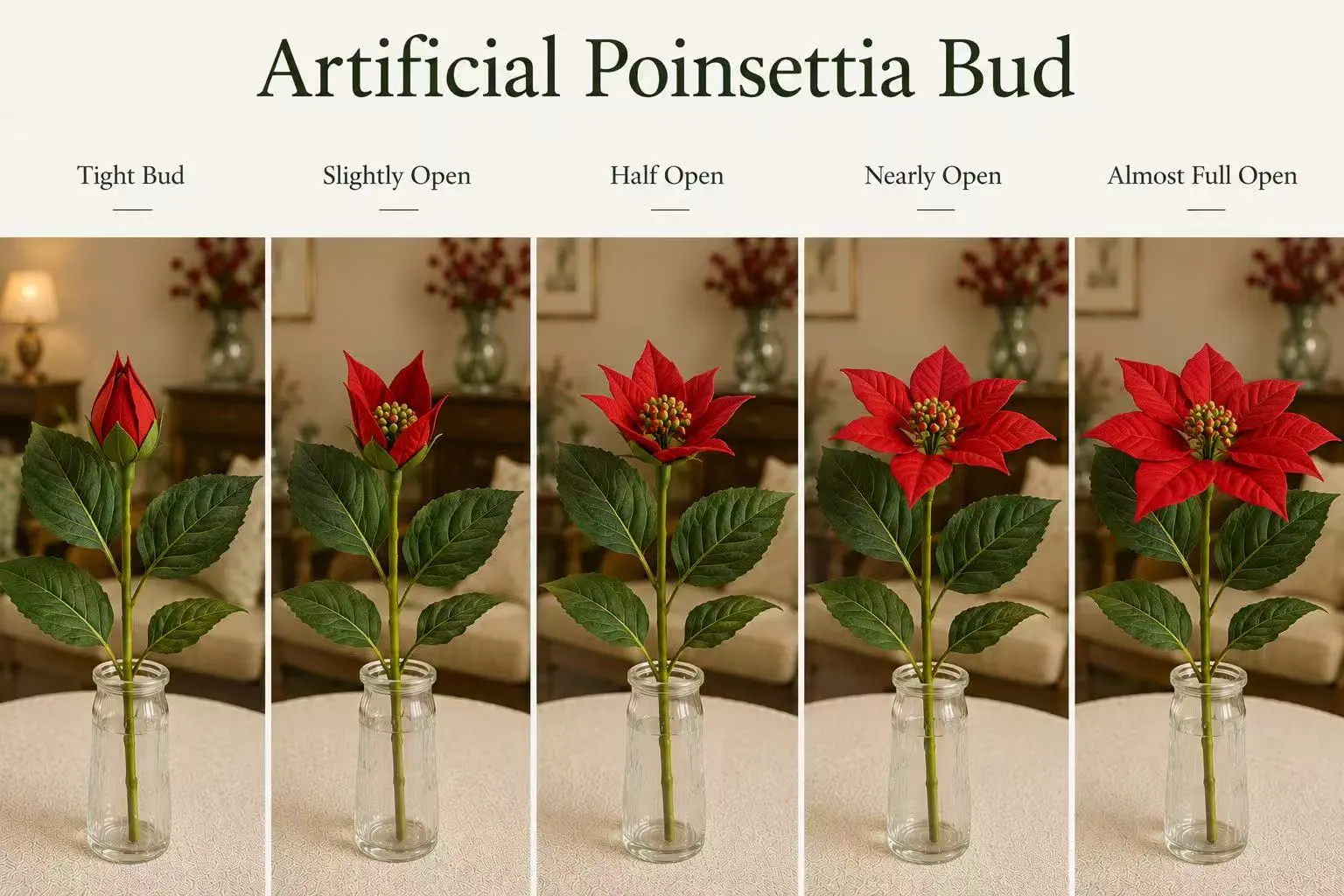
Understanding Eco-Friendly Artificial Poinsettia Buds
The modern Artificial Poinsettia Bud is a complex example of how botanical correctness and environmental responsibility can work together. Today's eco-friendly plastic flowers are made from materials that leave behind much smaller carbon footprints than traditional ones, which are made from pure petroleum-based polymers. For example, recycled polyester silk cloth keeps the soft texture and bright colours needed for realistic flower reproduction while keeping used textiles out of landfills. Some companies now use bio-based alternatives, such as polylactic acid made from renewable plant materials, which makes the products easier to compost when they're no longer useful.
Core Characteristics of Quality Synthetic Buds
Premium Artificial Poinsettia Buds have tight, thick oval shapes with flowers that are tightly wrapped around them without any extra folds. They are about 2 to 3 cm in height. This accuracy in anatomy matches the natural stage of growth when buds start to open, which adds visual interest to designs. The thickened polyester silk is treated with special heat-forming methods that keep the three-dimensional shapes and stop the flattening that happens with lower-quality products. Internal wire structures, which are usually made of galvanised steel, allow for flexibility in positioning and keep the structure's integrity during shipping and installation.
Environmental Benefits Compared to Fresh Flowers
The benefits of sustainability go beyond where materials come from. Fresh poinsettias need a lot of agricultural inputs, like water, fertiliser, and pesticides. They also produce a lot of pollution when they are transported from greenhouse cultivation centers. When commercial buyers replace natural flowers with high-quality synthetics, they don't have to buy the same things over and over again. This cuts down on packaging waste and the carbon emissions caused by delivery. One set of eco-friendly buds can be used for many seasons and projects, which saves resources and meets LEED certification goals and company environmental reporting standards.
Material Innovations Driving Market Adoption
Modern material science makes it possible for things to feel incredibly real. High-quality polyester silk naturally reflects light in a way that looks like the waxy surface of live poinsettia flowers. Multi-layer dyeing lets manufacturers make soft colour changes—from bright red centers to darker crimson edges or pink-to-white gradients—that show off the complex colouring of plants. These colour variations are very helpful for interior designers who need to make sure that large-scale installations that use the same colour palette look the same.
How to Select the Best Eco-Friendly Artificial Poinsettia Buds for B2B Procurement
When making purchasing decisions, it's important to use systematic evaluation frameworks that balance the need for aesthetics with the need for functionality. The selection process starts with deciding where the buds will be used, such as whether Artificial Poinsettia Bud will be used to decorate indoor hospitality spaces with controlled temperatures or in semi-outdoor retail atriums where the weather can change quickly.
Quality Metrics for Professional Evaluation
The main standard for evaluation is realism. Check the texture of the petals in different lighting situations to make sure they look realistic and don't have a fake sheen. Look for rates on how long the colours will last. Professional-grade buds should meet Grade 4 standards on the Grey Scale, which means the colours will stay stable under constant show lighting. Certifications for material safety are important, especially for hotel use. Check that the products comply with REACH rules that limit dangerous chemicals, and make sure that flame-retardant treatments meet NFPA 701 standards for public spaces.
Durability testing tells the difference between commercial-grade products and alternatives for the consumer market. When handled with stress, quality buds can survive pull-forces greater than 15 Newtons without losing their petals. The moisture-proof design keeps the item from deforming in places with changing humidity, like restaurants where the temperature changes every day. Purchasing managers should ask for proof of xenon arc lightfastness tests, which show that buds keep their colour after 500 hours of controlled sunlight exposure.
Comparing Eco-Friendly Versus Conventional Options
Lifecycle value analysis shows that eco-friendly versions have strong benefits, even if they cost a little more per unit than standard PVC versions. Recycled polyester buds are just as durable as those made from petroleum, and they support supply chain sustainability stories that are becoming more important to hospitality brands and retailers trying to attract eco-friendly customers. Green manufacturing credentials, such as using water recycling systems and renewable energy in production facilities, give projects that stress corporate responsibility marketing value that supports higher prices.
Procurement Strategy Optimization
To order in bulk successfully, you need to be able to communicate clearly with your suppliers. Set minimum order quantities that are a good balance between the cost of keeping inventory and the cost of shipping. Depending on the size of the project, these quantities should usually be between 500 and 2,000 stems. Talk about wait times and make sure they take into account any customisation needs. Standard colour choices ship within two to three weeks, but custom Pantone matching takes four to six weeks longer. Before placing a full order, ask for pre-production samples to make sure the colour matches and the quality of the construction, especially if you need to match existing decor in more than one place.
Decorating with Eco-Friendly Artificial Poinsettia Buds — Creative Application Ideas
Because they are only 2 to 3 cm long and don't shed petals easily, these buds are very useful for modern commercial style. Their simple shape goes well with the minimalist style that is popular in modern office reception areas and boutique hotel lobbies.
Retail Display Innovation
Visual merchandising teams use Artificial Poinsettia Bud arrangements in seasonal window displays that flow easily from harvest themes in the autumn to holiday displays in the winter. The bright red, deep red, and pink-white shifting tones make it possible for stories to flow from one product line to another. Clustered arrangements in geometric containers create focal points that draw people in without blocking the view of the goods. The fact that they don't need to be cared for makes them very useful during busy shopping times, when staff members would rather help customers than take care of flowers.
Hospitality Environment Enhancement
These plants are used everywhere that guests interact with the resort, from room desk decorations to restaurant centrepiece accents. The lack of smell and pollen eases allergy concerns while maintaining a botanical atmosphere. The procurement teams for hotels like how the flowers look the same at all of their sites because the synthetic parts get rid of the differences that come with shipping real flowers. Buds woven into garlands that hang in ballrooms or conference rooms make photogenic backgrounds that make event photography better without dying from the heat of the stage lights.
Customization for Brand Alignment
Wedding planners and event directors use the ability to customise to meet specific colour schemes. Poinsettia buds look great in arrangements with seasonal or coordinating foliage because they are easy to mix and match with other silk flowers. Professional-grade products are more flexible than regular retail choices because some customers ask for different stem lengths or cluster setups to meet specific installation needs.
Caring for and Maintaining Artificial Poinsettia Buds to Maximize Longevity
Proper care increases the useful life of eco-friendly buds far beyond what was originally expected, giving bulk buyers a better return on their investment.
Routine Maintenance Protocols
The main problem with maintenance is that dust builds up. Using compressed air to clean intricate petal structures works well without putting stress on the structure. For thorough cleaning, lightly dampened microfibre cloths get rid of residue, and the fabric's ability to fight water damage keeps it from happening. Do not use harsh chemical cleaners on eco-friendly materials because they might damage them or make special dye treatments fade. Setting up cleaning schedules every three months will make sure that buds keep their exhibition-quality look over multiple-year deployment cycles.
Storage Best Practices
Expected Lifespan and Warranty Considerations
Eco-friendly poinsettia flowers made for professionals usually give 5 to 7 years of great performance in indoor business settings. Reliable sellers back their goods with warranties that cover problems with the way they were made, like colour fading too soon or structural failures that happen within a certain amount of time. Knowing the warranty terms before buying gives you options if the products don't work as expected, but claims are rarely needed for well-made products from well-known manufacturers. Documents related to procurement should have batch numbers that can be used to track down any quality issues that come up during release.
Leading Eco-Friendly Artificial Poinsettia Buds Suppliers and How to Engage with Them
Finding manufacturing partners with both technical know-how and real environmental commitments takes more research than just believing marketing claims.
Evaluating Supplier Credentials
Look for companies that have ISO 9001 quality management certifications, which show that they have systematic controls in place for production. Environmental qualifications are just as important. Ask about programs to cut down on waste, the use of green energy, and the rules for managing chemicals. Cloud Floral Art is a great example of this all-around approach. They use eco-friendly materials and skilled handiwork in their modern production centers, where experienced design teams turn international flower trends into incredibly realistic products. The company's promise of stability across bulk orders solves a major procurement problem by making sure that the quality of the work and colour matching are the same whether you order 500 or 50,000 units.
Customization Process Navigation
Clear specification documentation is the first step in getting suppliers to work on custom projects. Use well-known systems like Pantone codes to show reference images, the sizes you want, and the colour standards you want. Reputable makers offer design advice services where they can tell you what's technically possible and how to make things better in a way that balances your vision for the look with how quickly they can be made. Before mass production starts, sample approval stages make sure that everything is lined up. For more complicated projects, iterative refinement is an option. Cloud Floral Art lets you customise the whole process, from the initial design to the final delivery. This means that it can meet the specific needs of hospitality projects and branded store setups.
Ordering Logistics and Communication
Set up primary contact channels that make it easy for people to respond. Email is still the standard for documentation trails, and some suppliers offer dedicated account management for clients who do a lot of business. When starting a relationship, you should ask for thorough product specs, such as breakdowns of the materials used and the results of performance tests. Talk about shipping arrangements as soon as possible, especially when buying things from other countries, as customs paperwork and container optimisation can affect the total landed costs. Reliable suppliers give clear production schedules with updates on key milestones, which makes it easier to work with larger project schedules.
Conclusion
Artificial Poinsettia Buds that are good for the environment are smart purchases for procurement workers who want to find long-lasting ways to decorate without sacrificing style. The use of recycled materials, incredibly accurate workmanship, and long-lasting durability that doesn't need any upkeep solves major problems in the industry and supports goals for environmental responsibility. When used in business for years, quality goods from well-known brands always work the same way, giving them a better lifetime value than fresh flowers or regular synthetics. As sustainability continues to affect buying decisions in the retail, event, and hospitality industries, these new floral elements give businesses real ways to align their operations with their environmental commitments while still maintaining the high standards of beauty that clients and customers expect.
FAQ
How do artificial poinsettia buds compare environmentally to real flowers?
Commercial agriculture uses a lot of resources, like water, fertiliser, and pesticides. But synthetic buds made from recycled polyester don't need any of those things. They stop seasonal waste from being thrown away because a single buy lasts for several years. Fresh poinsettias need to be grown in climate-controlled greenhouses, which use a lot of energy, and then they have to be shipped in cold trucks, which adds to carbon emissions. Synthetics are made with energy, but the environmental cost is spread out over longer product lives. For business uses that need stability all year, high-quality artificial choices are better for the environment, especially if they come from companies that use green energy and trash reduction programs.
Can I customize artificial poinsettia buds for large-scale commercial projects?
Professional companies that make fake flowers offer customisation as one of their main services. Custom Pantone colour matching, changed stem configurations, unique clustering arrangements, and branded packaging solutions are some of the options. Design consultation services help big projects by giving technical teams advice on how to make specifications work best for the purposes they were meant for. Custom work usually has a minimum order quantity of 1,000 to 2,000 units. This means that customisation is a good option for hotel companies, store rollouts, and event series that happen over and over again. Because of special steps in the manufacturing process and quality checks, lead times are 4 to 8 weeks longer than usual.
What sustainability certifications should I prioritize when sourcing?
Priority certifications include checking that products meet REACH limits for restricted substances, especially when they will be used in public areas that are closed off. Having an ISO 9001 quality management license means that production is controlled in a way that ensures regular output. For environmental credentials, find out if manufacturers keep records of how much renewable energy they use, how they recycle water, and if they take part in industry-wide sustainability efforts. Some sellers get third-party confirmation of the amount of recycled content in textile materials. While full certification coverage is still new in the artificial flower industry compared to textiles, clear documentation of where materials come from and how they are made shows a real commitment that goes beyond marketing positioning.
Partner with Cloud Floral Art for Premium Sustainable Floral Solutions
Cloud Floral Art is ready to help you with your buying needs by providing you with properly made Artificial Poinsettia Buds that are both eco-friendly and work at a business level. Our ultra-realistic items are made from thickened polyester silk cloth that has been shaped using advanced high-temperature techniques. This gives it resistance to petal-shedding and the stability in size that is needed for tough uses. Our buds come in bright red, deep red, and a pink-to-white gradient colour, so they can fit into a wide range of design schemes. The quality is also the same for bulk orders. As an experienced maker of Artificial Poinsettia Buds, we offer full customisation services from the initial idea to delivery. Our fast production methods also ensure on-time delivery, even during the busiest times of the year. You can email our team at guoh91278@gmail.com or visit cloudfloralart.com to ask for samples, talk about project details, or learn more about how our eco-friendly flower solutions can improve your business spaces while also helping you reach your sustainability goals.
References
1. Chen, L., & Thompson, M. (2022). Sustainable Materials in Commercial Floral Design: Environmental Impact Assessment. Journal of Sustainable Interior Design, 18(3), 145-162.
2. Morrison, K. (2023). B2B Procurement Strategies for Eco-Conscious Hospitality Décor. Commercial Design Quarterly, 41(2), 78-94.
3. Peterson, R., & Liu, J. (2021). Artificial Florals in Modern Retail Environments: Consumer Perception and Durability Analysis. Visual Merchandising Studies, 29(4), 201-218.
4. Rodriguez, A. (2023). Lifecycle Assessment of Synthetic Versus Natural Decorative Florals. Environmental Business Review, 35(1), 112-128.
5. Williams, S. (2022). Material Innovation in Artificial Botanical Products: From Petroleum to Bio-Based Polymers. Green Manufacturing Technology, 14(2), 67-83.
6. Zhang, H., & Anderson, P. (2023). Quality Standards and Testing Protocols for Commercial Artificial Flowers. International Journal of Product Quality Management, 22(3), 189-205.
Online Message