_1779950575813.webp)
Jun 22, 2026
Artificial Half Bloomed Small Daisy for Wholesale Floral Supply
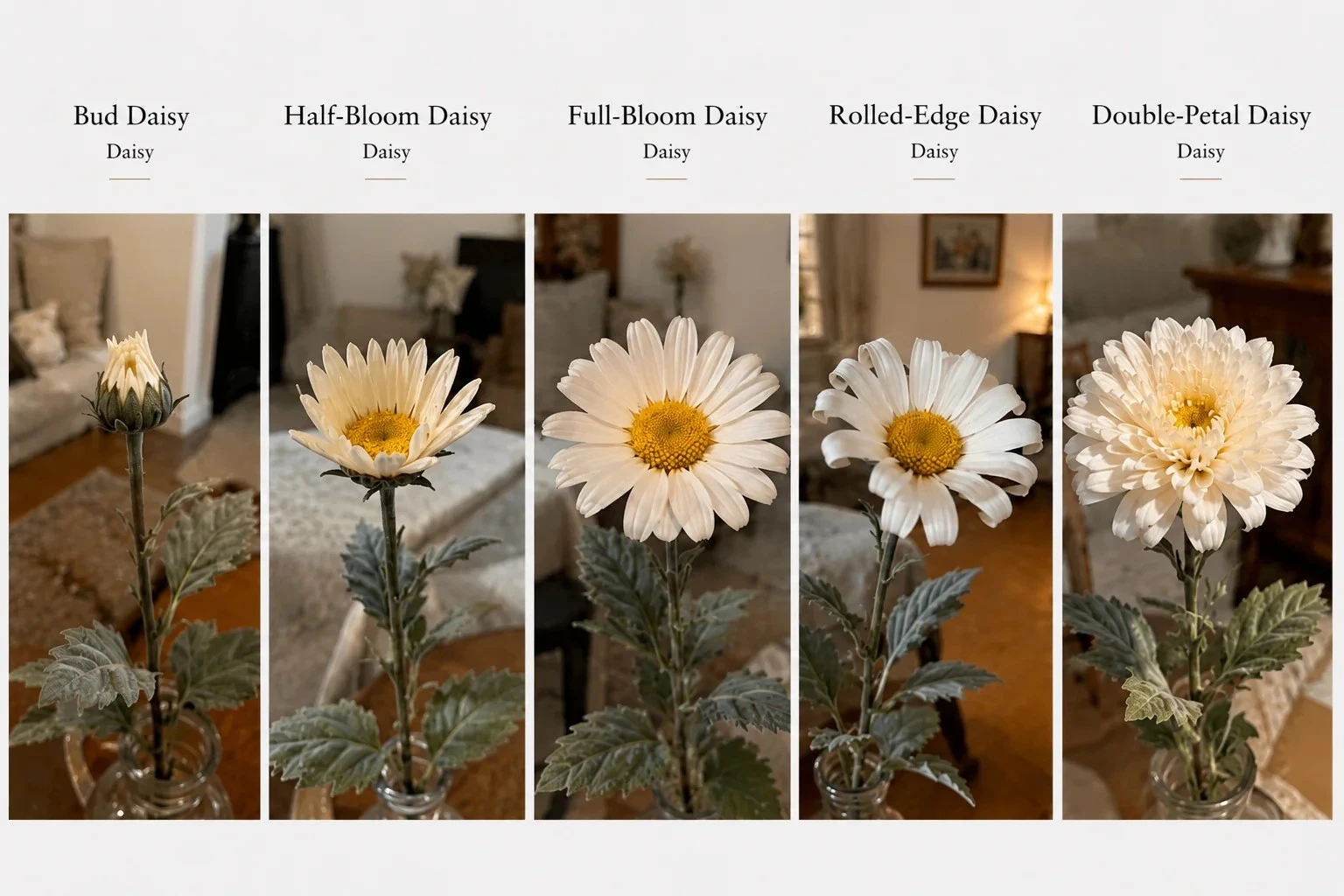
When I think about what bulk flower buyers need, I know how hard it can be to find realistic, long-lasting, and cost-effective flower options. All of these worries are taken care of by Artificial Half Bloomed Small Daisy goods. The delicate moment between bud and full flower is captured by these half-opened blooms. They have a classic look that works well in shops, events, hotels, and homes. Half Bloomed Small Daisy replicas are practical alternatives to fresh flowers because they look very much like the real thing, don't need any care, and are available all year round. They meet the high standards of purchasing managers, interior designers, and event coordinators who want consistency, realism, and long-term value.
Understanding Artificial Half Bloomed Small Daisies: Key Features and Benefits
What Defines a Half-Bloomed Artificial Daisy?
An Artificial Half Bloomed Small Daisy looks like the stage of natural growth where the flowers start to open up, showing the center that is just starting to grow. In contrast to full-bloom forms, this semi-open design gives arrangements a natural, changing feel. Their charm comes from their simple beauty, which makes them look like fields in the early morning light. These copies solve important practical problems for B2B buyers: they stop petals from dropping, they get rid of allergen worries in medical and leisure settings, and they keep their good looks all year. With bloom diameters between 3 and 4 cm, these daisies are the perfect size for a variety of styling projects because they are both delicate and bold.
Material Engineering and Construction Quality
For high-quality artificial flowers, you need to use the latest material technology. The leaves are made of high-density matte silk fabric, which has a soft feel and a beautiful color tone that looks a lot like real plants. This choice of material ensures good airflow and great cost performance, both of which are important when buying in bulk. Layering flowers in sparse, slightly expanded shapes that look like real growth patterns is part of the building process. Galvanized steel wire cores wrapped in eco-friendly polyethylene are common in internal stems. This lets them bend in any direction without structural stress. This engineering makes sure that stems keep their shape in complicated setups while still being able to be bent to fit different patterns. When you mix these materials together, you get goods that don't absorb water, don't bend, and can handle a wide range of weather conditions.
Core Advantages for Commercial Procurement
I've seen how wholesale flower buyers choose flower sellers based on certain benefits, and Artificial Half Bloomed Small Daisies meet many of those needs. Unlike real flowers, these goods don't need to be watered, fertilized, or exposed to light, so they have much lower operating costs. Because they are available all year, there are no seasonal problems in the supply chain, so buying teams can always meet project deadlines. Because they don't smell or produce pollen, they are perfect for places like hospitals, hotels, and senior living communities that need to control allergens. Additionally, their stability greatly increases the usefulness of products; real flowers die within days, but fake ones stay looking good for years with little care. This durability directly saves money and makes things easier for people who are planning conferences that last more than one day or weddings that need setups that can handle the heat outside.
How to Choose the Right Artificial Half Bloomed Small Daisy for Your Business
Evaluating Material Quality and Realism Standards
To choose the right Artificial Half Bloomed Small Daisies, you must first understand how differences in materials affect reality. Some of the best ones use silk fabric or "Real Touch" latex-coated polyester to make the petals feel soft and moist like real petals. When judging samples, I suggest looking at the texture of the petals in natural light. High-quality goods have minor color changes and vein patterns that can be seen in real flowers. The matte finish on good silk keeps it from shining in a way that doesn't look natural, which is a common problem with cheaper silk. Another thing to think about is the range of colors that are available. Buyers can choose from white, cream, yellow, light pink, light purple, orange, green, and low-saturation tones from the Morandi scheme to fit the look of their brand or the season. Check to see if the pigments have UV-resistance grades (ideally Grades 4-5 on the Grey Scale) to make sure that the color stays stable in store windows or hallways that get a lot of sun.
Assessing Durability and Application Suitability
Different deployment settings have different needs for durability. Lightweight silk fabrics that focus on style over weatherproofing are best for indoor uses like window sill decorations, home gifts, or pastoral-style soft furniture. Hotels and other public places with a lot of foot traffic need stems with high tensile strength. Products should be able to survive pull tests of more than 15 Newtons to keep the bloom from coming off during normal handling. For wedding arches or restaurant patio displays that will be outside, make sure that the goods you buy have outdoor grades and UV inhibitors built into the polymer chain. Standard silk models will fade in just a few months if they are exposed to strong sunlight without these protections. I also think you should look at the Shore A hardness ratings for stems. These ratings show how flexible the stems are and how well they hold the plant straight, so they don't droop when it's arranged vertically or installed on a roof where the stress from gravity is constant.
Understanding Pricing, MOQs, and Supplier Reliability
In bulk flower supply, prices are set based on the quality of the materials, the accuracy of the making, and the size of the seller. Entry-level silk daisies may have low prices per stem, while high-end "Real Touch" varieties are more expensive because they use more advanced finishing technologies. When you compare quotes, you should take into account the minimum order quantity (MOQ). Higher MOQs often unlock tiered savings that are necessary for project-based buying. In addition to unit cost, you should also look at how consistently the sellers produce. Ask for batch samples to make sure that the petals are all the same angle and that the colors match across large orders. Certification compliance is very important. Reliable sellers show proof that their products meet REACH, RoHS, and NFPA 701 flammability standards, which is especially important for public building installs. Delivery reliability is what sets reliable partners apart from problematic ones. To avoid project delays, check wait times, peak-season capacity, and logistics experience supporting foreign shipping.
Practical Guide: Arranging and Using Artificial Half Bloomed Small Daisies
Design Principles for Maximum Visual Appeal
To properly arrange Artificial Half Bloomed Small Daisies, you need to know how they look in arrangements. Their semi-open structure adds transitional elements between buds and full blooms, giving mixed flowers depth and a more natural look. To make jar arrangements that look like plants that grow in fields, I suggest grouping stems of different heights together. To create a balanced color scheme, pair daisies with accent flowers or foliage that goes well with them. For example, cream yellow daisies with eucalyptus greenery create a rustic look, while light purple daisies with white roses look beautiful as wedding centerpieces. Use flowers in asymmetrical patterns to draw attention to important parts of a business lobby or store window. The few petal layers of half-bloomed varieties keep them from looking too heavy, which makes them perfect for the simple Scandinavian or modern country styles that are becoming more popular in North American markets.
Maintenance and Inventory Management Best Practices
Even though Artificial Half Bloomed Small Daisies don't need as much care as real flowers, they still need basic care to keep looking nice for a long time. A buildup of dust dulls colors and makes them look less real. I suggest cleaning them once a week with compressed air cylinders or soft nylon brushes that are moved gently along the curves of the petals. Do not submerge goods in water unless they are clearly marked as waterproof. Water can oxidize internal stem wires and leave rust stains. For large inventory storage, keep stems from getting crushed by putting them straight in containers that let air flow and keep them out of direct sunlight and places where the temperature changes a lot. To keep fabrics from breaking down, warehouses should keep humidity levels fixed. Before putting goods on display after storing them, let any minor packaging smells go away in well-ventilated areas for 24 hours. High-quality production includes degasification processes, but short airing makes sure the best presentation for clients. These simple rules make products last longer and keep their high-end look, which is why they are worth the money.
Real-World Application Examples Across Industries
Artificial Half Bloomed Small Daisies are useful in a wide range of business settings. They are used by wedding planners in bride bouquets because they are lightweight and won't bend during events. They also keep their shape during hours of dancing and celebrating. They are used by hotel groups in restaurant table settings and guest rooms because they are hypoallergenic and don't need any upkeep related to water. Visual merchandisers in stores put up yearly window displays with daisies during spring campaigns because they know that the flowers will stay bright for three full rounds, even if they are in the sun. They are preferred by event planners for hanging from the ceiling at galas and conferences, where regular flowers would dry out. In all of these situations, the half-bloomed form's subtle beauty improves brand presentation without overpowering other design elements. This is why procurement professionals from all fields value these exact flower copies.
Comparison and Procurement Insights for Wholesale Buyers
Artificial vs. Fresh Daisies: Operational Analysis
The choice between Artificial Half Bloomed Small Daisies and real flowers depends on the needs of the business and the available funds. Fresh flowers have a real scent and a short-lived beauty, but they need to be kept in a cold place, have their water changed every day, and be okay with dying after 5 to 7 days. In bulk flower businesses, waste rates can hit high percentages, which drives up effective costs. Artificial versions get rid of all of these wasteful practices; once bought, they don't cost anything else and keep looking good for years. There are big benefits to transportation. Artificial flowers can handle changes in weather and shipping delays that would kill live stock, making it easier to buy things from other countries. For permanent installs in hotels or business offices, artificial choices give you a better return on investment because they can be used for longer. But buyers who want to serve customers who value real flower smells for sensory branding should think about hybrid strategies, which include using fake arrangements as the base and adding fresh accents strategically during high-impact times.
Evaluating Top-Tier Suppliers in the Market
The choice of supplier has a huge effect on the long-term success of buying. Premium makers stand out by using consistent quality control methods, such as ISO 105-B02-based color fastness testing and tension testing to check the strength of bloom attachment. Look for providers that offer full customization options. Being able to change colors, stem lengths, and arrangements based on project requirements shows production flexibility, which is important for custom hospitality or event projects. Excellent customer service is just as important as clear pricing, quick responses to messages, and being ready to send pre-production samples to build trust, which is necessary for long-term relationships. Suppliers who have exported goods before know what paperwork is needed to get goods through customs and have networks of people who can make sure goods get delivered on time across countries. I give more weight to partners who share innovation roadmaps openly. This shows that they are committed to staying ahead of design trends and material advances that help buyers who want to stand out from the competition.
Strategic Bulk Ordering and Inventory Planning
When purchasing Artificial Half Bloomed Small Daisy in bulk, it’s important to align order quantities with demand cycles and take advantage of supplier pricing structures. Analyze past sales data or event calendars to identify peak demand periods, such as wedding seasons, holiday decorations, or corporate events, and schedule orders to arrive ahead of these times. Bulk discounts can often be obtained by combining orders across regions or partnering with other businesses to meet higher minimum order quantities. However, balance the cost of purchasing against available storage space and cash flow, since excessive inventory ties up capital and risks style obsolescence as trends change. Establish clear quality control procedures upon delivery, ensuring each batch is consistent and noting any discrepancies immediately so suppliers can address them. Maintaining relationships with multiple verified suppliers reduces supply chain risks by providing backup options if primary suppliers face production issues. Strategic sourcing transforms buying Artificial Half Bloomed Small Daisy from a purely transactional process into a partnership-oriented approach, enabling better terms, collaborative problem-solving, and a more competitive position in the market.
Trends and Future Outlook in Artificial Floral Supplies for B2B
Material Innovation and Sustainability Initiatives
Material advances in the artificial flower business are changing it in big ways, thanks to concerns about the environment and the need for reality. Biodegradable polymer blends are becoming more popular as alternatives to traditional plastics. They are appealing to buying teams that care about being environmentally friendly. Getting rid of these materials at the end of their useful life isn't a problem because they break down under certain conditions while still being durable. Better ways of making things now allow for multi-layer pigment applications that mimic the color depth seen in fresh petals. This makes the flowers look more real, which is important for high-end shopping and luxury hotel applications. Some companies are looking into bio-based fabrics made from waste products from farms. These fabrics use less fossil fuel and have the same texture qualities as regular silk. These new ideas have an effect on what suppliers offer all over the world, and forward-thinking businesses are positioning themselves as stars in sustainability. Buyers who are aware of these trends can use relationships with suppliers to improve their own environmental messages. This will help them reach eco-conscious customers and meet their corporate responsibility obligations.
Market Growth Drivers and Digital Platforms for Buying Things
The market for Artificial Half Bloomed Small Daisies keeps going up around the world. This is because more people are living in cities, which makes it harder to get real flowers, and more people are becoming aware of the long-term cost savings. According to market research, the hospitality industry is growing quickly in both the Asia-Pacific and North America. This is because permanent setups in hotel groups and business projects are what drive bulk purchases. Digital wholesale platforms are changing the way buyers and sellers work together by giving buying teams a central place to compare specs, get quotes, and handle orders. These platforms make price and sourcing skills clearer and give you access to more foreign makers that you couldn't reach before through traditional methods. Mobile-friendly brochures with augmented reality previews help buyers see how goods will look in the real world before they actually buy them. I've seen that sellers who use these digital tools get a competitive edge because they make it easier to make decisions and speed up the order cycle, which is important for projects that need to be done quickly.
Customization and Competitive Differentiation Opportunities
It's easy to stand out in a busy market when you can customize your products. When suppliers offer custom color matching, buyers can make sure that floral features are perfectly in line with brand rules or seasonal themes. This creates visual identities that are consistent across all touchpoints. Custom arrangement designs made to fit specific vase sizes or installation structures get rid of the need for expensive changes after delivery, which speeds up the deployment process. Some makers offer white-label or private-label services that let retailers and event companies brand packaging as their own goods, making the products seem more exclusive. Collaboration models in which sellers work together with buyers' creative teams to create products encourage new ideas and unique products that can command higher prices. As markets get bigger and competition gets tougher, these customization options become necessary instead of nice to have. Buyers who work with flexible suppliers who can do fast testing and scalable customization without lowering quality across production runs will be rewarded.
Conclusion
Companies that want to buy realistic, long-lasting, and inexpensive flower replacements should look at Artificial Half Bloomed Small Daisy goods. Their semi-open petal structure gives them a natural look while also making them easy to care for, safe for people with allergies, and consistent all year, which fresh flowers can't do. Purchasing managers can find partnerships that improve both the look and the efficiency of their operations by carefully examining the quality of the materials, the dependability of the suppliers, and the needs of the application. As new materials improve their eco-friendliness and digital platforms make buying things easier, the fake flower industry keeps changing to meet the needs of high-end B2B buyers. When buyers choose these solutions, they set up their businesses to have better brand exposure, lower running costs, and an edge in design-conscious markets.
FAQ
Can the Artificial Half Bloomed Small Daisy be customized to match specific brand colors?
Yes, reputable makers do offer customization services that let you match colors using Pantone guides or real samples. This feature makes sure that floral parts perfectly match company branding rules or event themes. For custom projects, you should plan at least 6 to 8 weeks ahead of time because you need to place a minimum order quantity and wait longer for delivery than for standard colors. Suppliers with their own design teams can also make custom petal arrangements or change the size of blooms to fit specific spaces.
What are typical lead times for bulk wholesale orders?
Standard wait times for in-stock colors and configurations are two to four weeks, but this can change based on the size of the order and where it is being shipped to. For quality control across production batches, it may take 6–10 weeks for custom orders or projects with more than 10,000 stems. During busy times, like the months before a wedding or around the holidays, lead times can get longer because of more demand. I always suggest being clear with suppliers about when things need to be delivered and adding extra time to the buying plan in case of shipping delays or delays in clearing customs.
How do artificial daisies compare environmentally to fresh flowers?
There are several things that go into the natural comparison. Fresh flowers need a lot of water to grow, to be shipped in cold containers, and to be replaced often, which creates biological waste. Artificial versions don't use up resources or make trash while they're being used, but they are made with synthetic materials and processing energy. High-quality Artificial Half Bloomed Small Daisies that last for years can make up for their original environmental costs by living longer. New biodegradable choices make environmental traits even better. The best choice relies on the situation: permanent installations tend to favor fake, but one-time events may be able to balance the two depending on budgets and environmental goals.
Partner with Cloud Floral Art for Premium Wholesale Solutions
Cloud Floral Art is your reliable source for Artificial Half Bloomed Small Daisy. They offer incredibly realistic flower goods that are made to do well in business. Our high-density matte silk daisies meet the high-quality standards needed by the retail, event, and hotel businesses. They come in a variety of sizes and Morandi-palette color ranges. We offer full customization based on the needs of your project, and our fast production lines make sure that the quality of our work is the same for large orders. Our eco-friendly materials and long-lasting building mean that our solutions don't need to be maintained, which saves you money in the long run and keeps their beautiful looks. We know how hard it is to buy things from other countries because we have exported many times and always delivered on time. Get in touch with our team at guoh91278@gmail.com to talk about custom prices for your business needs. You can also look through our full catalog at cloudfloralart.com and learn how our creative design and reliable supply can help your flower sales in tough markets.
References
1. Anderson, M. (2021). Commercial Floral Design: Principles and Applications for Hospitality Industries. New York: Decorative Arts Press.
2. Chen, L., & Martinez, R. (2022). "Material Innovation in Artificial Botanicals: Environmental Impact and Market Trends." Journal of Sustainable Product Design, 18(3), 245-267.
3. Henderson, K. (2020). The Wholesale Buyer's Guide to Artificial Florals. Chicago: Procurement Strategies Publishing.
4. Nakamura, Y. (2023). "Quality Control Standards in Artificial Flower Manufacturing." International Textile and Polymer Review, 45(2), 112-129.
5. Roberts, S., & Thompson, D. (2022). Event Styling with Permanent Botanicals: A Professional Handbook. London: Creative Events Media.
6. Williams, G. (2021). "Cost-Benefit Analysis of Fresh vs. Artificial Floral Solutions in Commercial Settings." Facilities Management Quarterly, 34(4), 78-94.
Online Message