_1779950575813.webp)
Sep 17, 2026
Artificial Cup Shaped Rose for Weddings, Vases, and Events
When it comes to elevating wedding tablescapes, hotel lobbies, or high-volume event installations, the artificial cup shaped rose has become one of the most trusted tools in a professional decorator's arsenal. With its deep, globular corolla and inward-curving petals that mirror the coveted centifolia rose morphology, this product holds a "peak-bloom" aesthetic indefinitely — something no fresh-cut stem can promise. Whether you are a purchasing manager sourcing at scale or an interior designer curating a cohesive visual scheme, understanding what sets these blooms apart is the first step toward a smarter procurement decision.
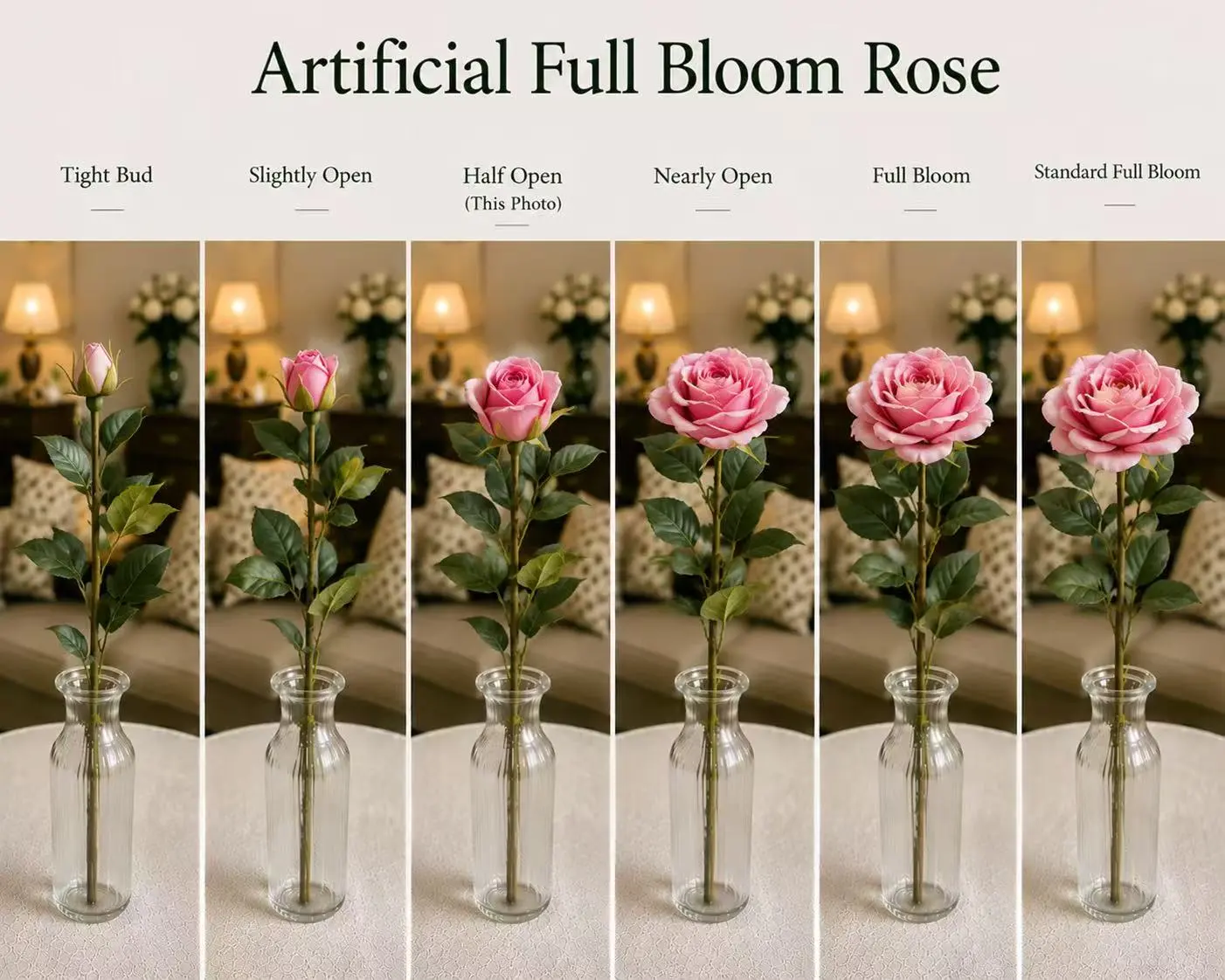
Understanding Artificial Cup Shaped Roses: Design, Benefits, and Materials
What Defines the Cup-Shaped Rose Form?
The shape of the cup-shaped rose comes from old French flower traditions. There are a lot of tightly packed petals around the center of the flower, making it look like a cup. The petals curve inward to make the bloom full and round. Cloud Floral Art's version is 7–9 cm across and is made of soft simulated silk fabric, which was chosen because it can mimic the velvety, light-catching surface of a real flower petal. The color scheme includes red, white, yellow, pink, purple, and orange. It can be used for both soft wedding colors and bright business displays.
Why Procurement Professionals Prefer Silk Over Alternatives?
In terms of color depth and how realistic they feel, silk-based flowers always do better than basic plastic blossoms. Cloud Floral Art uses high-density polyester silk, which has Grade 4+ color fastness under commercial lighting (ISO 105-B02). This means that the flowers keep their richness even after being in a UV spotlight for a long time in a store or restaurant setting. There is also a huge drop in maintenance. You don't have to water, fertilize, or keep the temperature of these roses just right. All year long, they look great in exhibitions with just a daily dusting.
For business buyers of the Artificial Cup Shaped Rose, the real benefits are very big. These roses are a popular choice across many industries because they have the following main benefits:
- Zero allergen risk: These roses don't smell or have pollen, so they can be used in dining settings near hospitals, model homes, and event spaces where guests may include older people, children, or people with allergies.
- Structural resilience: The blooms don't get wet or deformed, and their cup-shaped rose shape stays the same even when the temperature changes from -10°C to +40°C. This is important for outdoor wedding pavilions or business areas where the weather changes often.
- Long-term cost efficiency: When compared to fresh roses, which lose their beauty after 48 hours and need to be shipped in a cold chain, silk cup-shaped roses keep their beauty over many years.
Because of these things, silk cup-shaped roses are a real investment and not just a pretty thing to look at. Buying things has a return that can be tracked over time.
How to Choose the Best Cup-Shaped Roses for Weddings and Events?
Matching Product Specs to Application Context
Setting up the deployment settings before making a large order keeps mistakes from happening that cost a lot of money. For a 360-degree setting, a wedding arch installation needs stems with a memory-wire core made of galvanized steel. On the other hand, a hotel lobby vase arrangement needs a heavier base stem to keep it straight. Color accuracy is very important for business decor that fits the brand. Reliable providers allow customization of the Pantone Matching System (PMS) to make sure that colors are the same from batch to batch across large orders.
Evaluating Realism, Weight, and Price-to-Value
In the B2B decorative market, realism for an Artificial Cup Shaped Rose is the main thing that makes people buy. The petal-to-calyx pull-off force test is the most reliable standard because it shows that the structure is still strong when it is being handled. For commercial-grade products, the industry standard is a resistance level of at least 15N. Aside from the structure, buyers should look at the depth of the color layers and the details on the petals' edges when the room is naturally lit. These small details determine whether the arrangement looks expensive or ordinary from a normal viewing distance.
Bulk prices are usually tiered based on the size of the order, and experienced buyers take shipping compression recovery into account when figuring out the real cost. A low-heat professional steamer can be used to repair products with thermo-molded petal curves, bringing back the original cup-shaped rose shape after being compressed during shipping. This is a huge logistical benefit for foreign importers.
How to Use and Care for Cup-Shaped Roses Across Settings?
Creative Application Ideas for Weddings and Commercial Spaces
Cup-shaped silk roses work great in high-density settings where fresh flowers would be hard to get to. High-end event designers use them to make flowery wall backgrounds and ceiling clouds because real roses would be too heavy and full of water to hold up the structure. In hospitality settings, top hotel chains use them in the lobby, guest rooms, and other areas to create a fresh, clean vibe that doesn't require regular procurement cycles or allergen management.
The 7–9 cm bloom width of an Artificial Cup Shaped Rose creates a balanced visual proportion without overpowering tableware or building features. These are two of the most common B2B uses for flowers: decorating a dining room table with flowers and making model houses look nice. Putting white and pink kinds together in a tall glass vase creates an effect that is often seen in high-end home settings.
Cleaning and Storage Best Practices
A disciplined maintenance protocol is needed to keep the quality of a product high during large-scale deployments. A cylinder of compressed air or a hair dryer on the cool setting can be used to clean deep cup corollas without hurting the tips of the petals. To keep blooms fresh for a long time, they should be stored horizontally and loosely wrapped in tissue. These easy steps keep the product's structure and appearance in good shape even after multiple seasonal deployments.
Procurement Best Practices: Sourcing with Confidence
Supplier Evaluation Criteria That Matter
If an artificial flower supplier is trustworthy and works with businesses in the US, they should show that they follow REACH and RoHS rules and make sure that their dyes and polymer parts are free of heavy metals and phthalates. Flame retardancy certification (NFPA 701 / BS 5852) must be obtained for all public venue projects, such as shopping malls, hotels, and convention centers. For seaside hotel projects or cruise ship installations, salt spray testing is an important extra credential that makes sure the wire core inside doesn't rust or bleed through the stem casing over time.
Cloud Floral Art has a thorough quality management system and a production line that is set up to produce a lot of flowers at once. The company allows OEM/ODM customization from design and prototyping all the way through mass production. This supply chain model works well for peak demand during seasonal events, the launch of new products in stores, and the spread of big hospitality projects.
Conclusion
The cup-shaped silk rose is not a compromise; it was chosen on purpose by procurement professionals who care about long-term value, operating efficiency, and visual consistency. When it comes to weddings, business interiors, hospitality projects, and event setups, Cloud Floral Art's Artificial Cup-Shaped Roses perform exceptionally well thanks to their highly realistic craftsmanship, wide range of colors, proven sturdiness, and ability to be fully customized. Product quality, supplier transparency, and responsive OEM support are the three things that turn a one-time purchase into a long-term partnership for buyers who are making decisions about bulk sourcing.
FAQ
Are these roses truly difficult to distinguish from real ones?
The visual appearance of real centifolia roses is very close to that of high-density polyester silk with layered petals and subtle color changes. To the untrained eye, there isn't much difference between event lighting and normal indoor lighting.
Can the bloom size be customized for large-scale event installations?
The standard sizes are 7–9 cm, which work well for most flower and desk uses. Custom sizes can be made through OEM agreements, which is a popular way for hotels and event planners to buy things.
What makes eco-friendly artificial roses a responsible choice?
When compared to fresh roses, which need to be grown with a lot of pesticides and shipped in cold containers, silk cup-shaped roses leave a much smaller environmental impact over their many-year service life. Products that meet the requirements of REACH make sure that no dangerous chemicals get into the indoor area.
How do I restore bloom shape after bulk shipping?
When a professional low-heat steamer is quickly used on squished petals, it awakens the thermoplastic properties of the material, which lets the cup-shaped rose return to its original mold shape.
Are these products safe for use in flame-sensitive public venues?
Products that meet the flame retardancy guidelines set by NFPA 701 or BS 5852 can be used in public commercial areas like hotel ballrooms and meeting halls.
Partner with Cloud Floral Art — Your Trusted Artificial Cup Shaped Rose Supplier
Cloud Floral Art offers consistent Artificial Cup Shaped Rose solutions on a large scale by combining highly realistic craftsmanship with full OEM/ODM customization, stable bulk production, and a history of exporting. Our team is ready to help you with your project from the sample stage to the shipping stage, whether you are making a wedding collection, outfitting a hotel, or making a holiday line for stores. To get a quote or sample of the product, email guoh91278@gmail.com or go to cloudfloralart.com right now.
References
1. Dole, J. M., & Wilkins, H. F. — Floriculture: Principles and Species, Prentice Hall, 2005.
2. Society of American Florists — State of the Industry Report, SAF Publications, 2023.
3. Textile Institute — Textile Terms and Definitions, 11th Edition, Textile Institute International, 2002.
4. Hobhouse, P. — The Story of Gardening, Dorling Kindersley, 2002.
5. International Interior Design Association (IIDA) — Commercial Interior Design Trends Report, IIDA, 2024.
6. American Society for Testing and Materials — ASTM D4966: Standard Test Method for Abrasion Resistance of Textile Fabrics, ASTM International, 2022.
Online Message