_1779950575813.webp)
Jun 17, 2026
Artificial Bud Style Tulip: How to Style Artificial Tulips So They Look Real
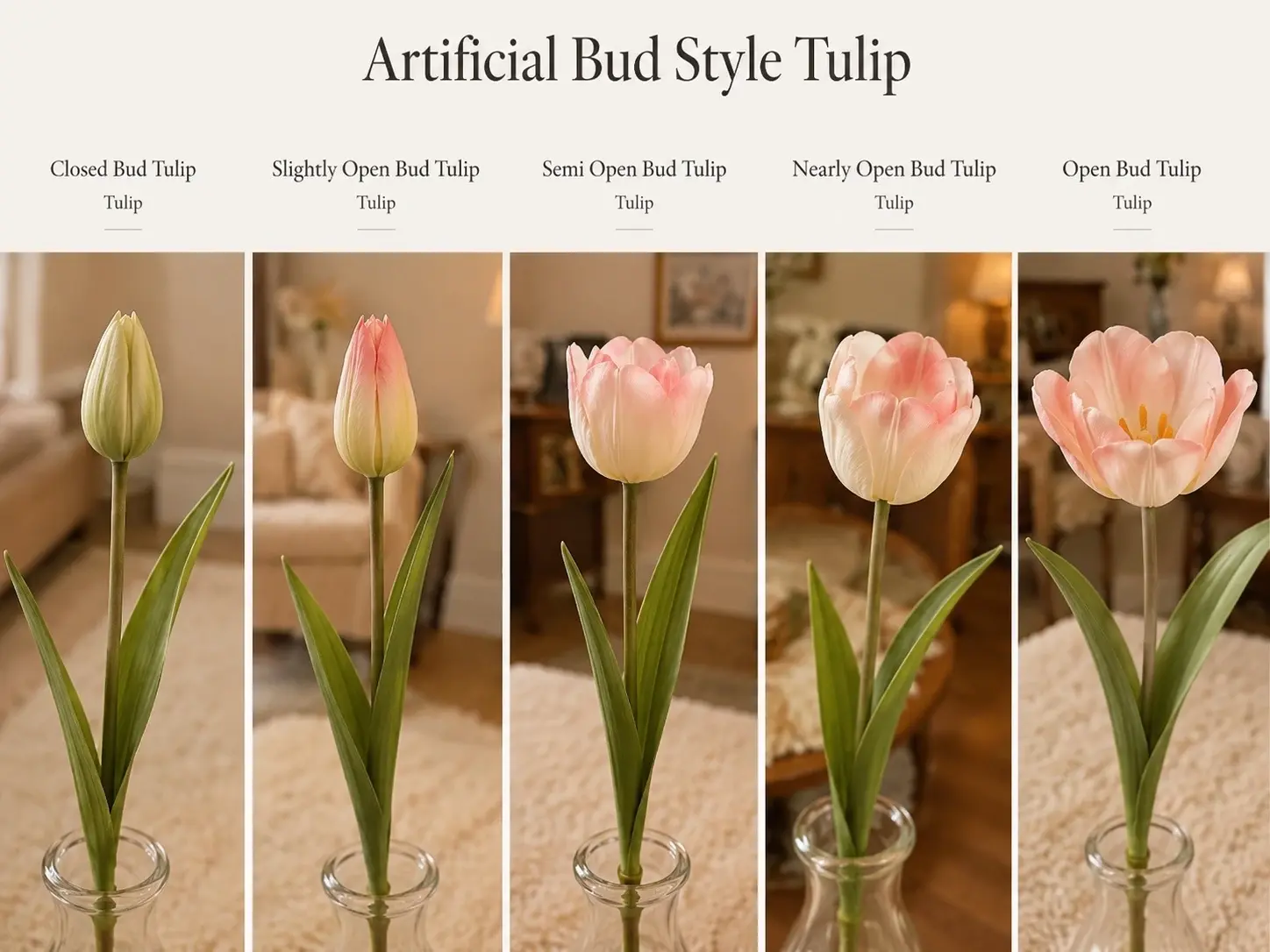
To style Artificial Bud Style Tulips so that they look real, you need to know how they're put together and use design principles that are meant to look like nature's flaws. These Artificial Bud Style Tulips, which are meant to show them before they fully open, are a low-maintenance way for businesses and homes to add beauty without any work. The key is to use high-quality materials, arrange the stems in an intentionally uneven way, and add matching plants to give the arrangement depth. Achieving the right look with these Artificial Bud Style Tulips all year long is impossible to tell apart from the real thing.
Understanding Artificial Bud Style Tulips: What Makes Them Unique?
The minimalist, pre-bloom look of Artificial Bud Style Tulips captures the stylish tension of a flower about to open. The bud style, on the other hand, highlights the tight structure and concentrated color gradients that are common in early growth stages, unlike fully opened Artificial Bud Style Tulips. This design theory solves problems that come up in business and hospitality settings where tulips only last three to seven days before they die.
Material Innovation and Construction
Modern Artificial Bud Style Tulips are made with thicker polyester silk fabric and advanced shaping techniques. This makes blooms that don't bend and have a soft, smooth surface. Because the buds are only 3–5 cm across, these pieces can be used in a wide range of flower arrangements and sculptures. These materials give a sense of realism that cheaper plastics can't match. They offer procurement managers a balance between longevity and aesthetic refinement.
Commercial Advantages Over Natural Flowers
The practical perks go beyond how nice they look. These Artificial Bud Style Tulips get rid of worries about pollen in places that serve food and drink, and where allergic guests could be a liability risk. The design that doesn't let water in and can handle different temperature control systems without drooping or losing petals is very popular in hotel halls and high-end restaurants. Because it's available all year, event planners can plan setups months ahead of time without having to worry about supply changes during different seasons or having to make last-minute changes because crops failed.
Design Versatility Across Professional Settings
Interior designers like that the colors stay the same when they order in bulk, whether they want a calm cream yellow for a spa gathering or a bright red for a high-end storefront display. White, pink, purple, champagne, and trendy Morandi mixed tones that are in line with current color trends are all in the range. When projects are spread out over several properties and the brand visual identity calls for unity, this stability becomes very important.
How to Style Artificial Bud Style Tulips So They Look Real: A Systematic Approach
To make arrangements that look real, you have to hide the main sign that they are fake: their forced stiffness and even placement. Different stalk angles, heights, and small flaws in the petals of natural tulip bunches show that they grew in a biological way. Reproducing these small flaws changes Artificial Bud Style Tulip displays from being clearly fake to looking very much like the real thing.
Stem Preparation and Wire Manipulation
First, look at the structure of the wires inside each stem. The galvanizing wire cores of good pieces bend easily without getting kinked. Instead of keeping stems straight, gently curve them at different angles. Tulip stalks naturally lean toward light sources and have small S-curves in them. Instead of making lines that are all the same, place the stems so that they cross each other a little inside the vase. This will make it look like real flowers are competing for room and light.
Greenery Integration for Depth
Bare roots quickly make something look fake. Add tulip leaves to the base, making sure they grow out at different heights along the stem instead of all coming together at one place. Add extra plants, like eucalyptus stems or soft grasses, to make the picture more interesting to look at. Multiple plant types are seen as proof of natural origin by the eye, so mixing textures, like smooth tulip buds with fluffy or shiny leaves, makes the arrangement look more real.
Strategic Color Blending
In nature, monochromatic bunches don't happen very often. If you only want to use one base color, choose buds with slightly different tones. For example, mix soft pink with darker rose undertones or cream yellow with champagne. This blending of colors keeps the flowers from looking flat, which happened with earlier versions of Artificial Bud Style Tulips. Putting darker buds closer to the center and lighter ones closer to the edges makes three-dimensional shading that looks like the way light moves through petals.
Vase Selection and Water Illusion
Transparent glass vases are tricky because you can see the dry stems, which goes against what you'd expect from cut flowers in water. One solution is to fill the vase with clear plastic water or glass beads that hide the bases of the stems while making them look like they have water in them. This problem is not a problem at all with opaque clay or colored glass dishes. Make sure the vase height follows standard flower design ratios. For appropriate visual weight, flowers should usually rise 1.5 times the height of the jar.
Choosing the Best Artificial Bud Style Tulip: Key Factors for Procurement Managers
Choosing where to get something affects both the instant look and the long-term costs of running the business. To find suppliers who can meet project deadlines and budgets while maintaining consistent quality across big orders, procurement workers have to look at a number of factors at the same time.
Material Composition and Tactile Quality
Artificial Bud Style Tulip designs vary significantly in quality and realism. When it comes to flow and light reflection, polyester silk materials are better than basic polyethylene plastics, which tend to shine when exposed to lighting in an unnatural way. It matters how the petals are made. Injection-molded petals usually have visible seam lines, while hand-assembled pieces that use fabric wrapping methods create smoother transitions between flower layers. Before you commit to large orders, ask for real examples to evaluate how the materials bend, whether colors transfer onto white surfaces, and how the weight distribution affects the stability of the arrangements.
Supplier Evaluation and Compliance Standards
Manufacturers that have been around for a while and have exported before know what foreign safety certifications are needed for business installs. Check that goods follow REACH and RoHS rules to make sure they don't contain any banned heavy metals or phthalates. This is especially important for schools and hospitals. During busy times, production capacity is very important. Suppliers should show that they have extra manufacturing capacity to handle large orders without changing delivery times or using lower-quality materials.
Cost Structure Analysis
If you want to get wholesale prices, you usually have to buy at least 500 to 1000 items. As you buy more, the prices per item go down a lot. But instead of just looking at unit price, buying managers should figure out the total cost of ownership. When compared to cheap choices that need to be replaced every 18 months, higher-quality items that last five to seven years are worth the extra money. When considering vendor offers, you should think about how much it costs to store, how much it saves on shipping, and how much it costs to hire people to do more frequent reinstallation.
Decorating Ideas and Applications for Artificial Bud Style Tulips in B2B Spaces
Strategically placing Artificial Bud Style Tulips in business settings improves how people see the brand and makes it easier to manage operating costs than hiring fresh flower vendors. These goods are used by different industries to deal with natural and logistical problems that are unique to their areas.
Corporate and Office Environments
Permanent installations that keep the brand's look uniform without having to be serviced every week are good for reception areas. Colors change with the seasons in conference rooms, from pastels in the spring to burgundies in the fall, so the rooms look new without having to buy new furniture. Modern design likes simple, elegant arrangements over flashy ones, and executive rooms often have single-stem displays in sleek containers. The compact bud shape fits in with this style.
Hospitality and Event Venues
Hotels are under a lot of stress, and flowers don't always help. Flowers in guest rooms have to be able to handle different air conditioning settings and cleaning plans without dropping petals on the sheets. For multi-day conferences, ballroom setups need arrangements that look good in pictures during the whole event and don't wilt under stage lighting. The moisture-proof design keeps wood surfaces and cloth upholstery from getting damaged by condensation. This cuts down on care arguments and replacement costs.
Retail and Visual Merchandising
Temperature changes and UV light that kills wild blooms in hours are common in window displays. Artificial Bud Style Tulips keep their color saturation and structural stability even when they are in direct sunlight for a long time. This means that visual merchandisers can make installations that look great for the whole season. Being able to make complicated arrangements off-site and then move them fully put together cuts down on the cost of installation labor and the time that stores have to close downtown.
Care and Maintenance Tips to Maximize Longevity of Artificial Bud Style Tulips
Following the right upkeep steps will make a product last longer and keep its shiny look, which is worth the initial investment. Setting up clear care processes keeps property portfolios that are spread out consistent and stops properties from falling apart too soon.
Routine Cleaning Methods
When dust builds up, it dulls colors and makes things look like they haven't been taken care of, which lowers the sense of quality. Ionic blowers or soft-bristle brushes that don't catch on cloth flowers are used once a week for gentle air dusting. For a deeper cleaning once a month, use microfiber cloths that are only slightly wet. Be careful not to use too much water, as it can get into gaps and cause wire rust inside. Cleaners and polishes with alcohol in them can damage polyester coats and leave behind powder that makes dust stick to them.
Storage Protocols for Seasonal Inventory
Off-season keeping needs care to keep things from permanently changing shape. If you want to store branches crosswise, put them in shallow boxes instead of upright containers, which press down on the lower buds. Acid-free tissue paper splits layers and soaks up wetness from the air in climate-controlled spaces. Stable temperatures between 60°F and 75°F keep materials from breaking easily in cold buildings or warping from heat in storage areas that aren't cooled. Inventory turnover makes sure that older stock is used up before it starts to break down due to its creation date.
Troubleshooting Common Issues
Stems that bend from accidental pressure can be fixed with gentle heat. For example, you can reposition wires by quickly heating bent parts with a hairdryer on low heat before the material cools and hardens again. Rotating the arrangement every few months can help fade colors that are mostly on the sides that get a lot of sun. Loose petals can come loose from weak adhesive bonds. When carefully matched to current building methods, archival-quality craft glue applied sparingly to the base of the flower can reattach parts without being seen.
Conclusion
To make Artificial Bud Style Tulips look like real flowers, you need to know how the materials work, how to place them strategically, and how to take care of them properly. Commercial buyers get big practical benefits from lower upkeep costs, no allergen risks, and sure visual stability even when the weather changes. Carefully choosing suppliers based on the quality of the materials and the standards for making makes sure that projects meet both the needs for good looks and reliability. Bud-format designs are small and elegant, and they can be used in a lot of places, from business hallways to high-end event installations.
FAQ
How can I assess whether artificial bud tulips will look realistic in professional environments?
To judge reality, you have to look at a lot of different material traits at the same time. Instead of flat, uniform coloration, high-quality flowers have slight color changes within each petal. The cloth should have small differences in texture that let light pass through naturally instead of reflecting it with a fake sheen. Stems should be gently bent; they should curve easily without creases or wires showing through the coating. Ask for samples to be tested in real life under the lighting conditions you need, since neon, LED, and natural light all show different features of the material.
What advantages does bulk purchasing offer for large-scale event planning?
When you buy in bulk, you can get big discounts on the price per unit and be sure that the colors will match perfectly across the whole setup. Working directly with manufacturers lets you change things like stem lengths, how tight the buds are, and even special color blends that you can't get through store outlets. When compared to making many small packages, consolidated shipping is easier on operations and the environment. Having extra goods on hand keeps you from having to rush to find things at the last minute when the event's scope changes or damage happens during installation.
How do artificial tulips compare environmentally to fresh flowers in commercial procurement?
Fresh flowers that are only used once create constant trash streams and carbon emissions from transporting them in cold conditions and making multiple deliveries. Quality Artificial Bud Style Tulip installations that last five to seven years have a hugely negative effect on the environment over time, even though they are made from materials that come from petroleum. In areas that are prone to drought, where hotel sites are limited in what they can do, saving water becomes very important. More and more modern production uses recycled polyester and low-VOC adhesives, which closes the gap in terms of sustainability while still meeting the performance standards needed for business uses.
Partner with Cloud Floral Art for Authentic Artificial Bud Style Tulip Solutions
Cloud Floral Art makes incredibly realistic Artificial Bud Style Tulips out of high-quality, thicker polyester silk that stays structurally sound for years of business shows. Our design team keeps up with flower trends around the world and offers carefully chosen color choices that range from classic whites to modern Morandi tones that can be used by a wide range of brands. Our wide range of customization services is useful for procurement managers. We can change the lengths of the stems, make custom color combinations, and come up with packing solutions that fit the needs of your project.
As an experienced provider of Artificial Bud Style Tulips, we keep a close eye on quality throughout production to make sure that all large orders are colorfast, structurally consistent, and environmentally friendly. Our efficient supply chain guarantees consistent wait times, even when demand is high during busy times of the year, keeping your project on schedule. Whether we're supplying a series of high-end hotels, setting up a business event that takes place in multiple locations, or setting up permanent store installations, our team is there for you from the first specification to the final delivery. Email our buying experts at guoh91278@gmail.com to talk about your needs and get personalized offers that strike a balance between good looks and usefulness.
References
1. Anderson, M. (2022). Commercial Floral Design: Sustainable Solutions for Hospitality Environments. New York: Interior Press.
2. Chen, L., & Thompson, R. (2021). Material Science in Decorative Botanicals: Polymer Applications and Longevity Studies. Journal of Interior Architecture, 15(3), 112-128.
3. Foster, K. (2023). Visual Merchandising Strategies: Permanent Installations in Retail Spaces. London: Commercial Design Publishing.
4. Harrison, D. (2021). Lifecycle Analysis of Artificial versus Natural Florals in Corporate Settings. Sustainable Procurement Quarterly, 8(2), 45-61.
5. Mitchell, S., & Park, J. (2023). Procurement Best Practices for Hospitality Décor: Balancing Aesthetics and Operational Efficiency. Hotel Management Review, 29(4), 203-219.
6. Williams, E. (2022). The Art of Realistic Silk Florals: Techniques for Professional Designers. Chicago: Decorative Arts Institute.
Online Message