_1779950575813.webp)
Jun 29, 2026
All the Best Artificial Flower Secrets You Need to Know
One method for altering areas with non-wilting flowers is the Artificial Half Blooming Peony. These exquisite reproductions depict the time when a peony is neither a tight bud nor fully open—a period of ideal grace. Understanding fake flower subtleties helps procurement managers, interior designers, and hospitality buyers control costs, design consistency, and brand presentation with dependable, beautiful floral arrangements. This complete guide shows how to choose, use, and source excellent fake flower solutions that enhance business spaces and last.
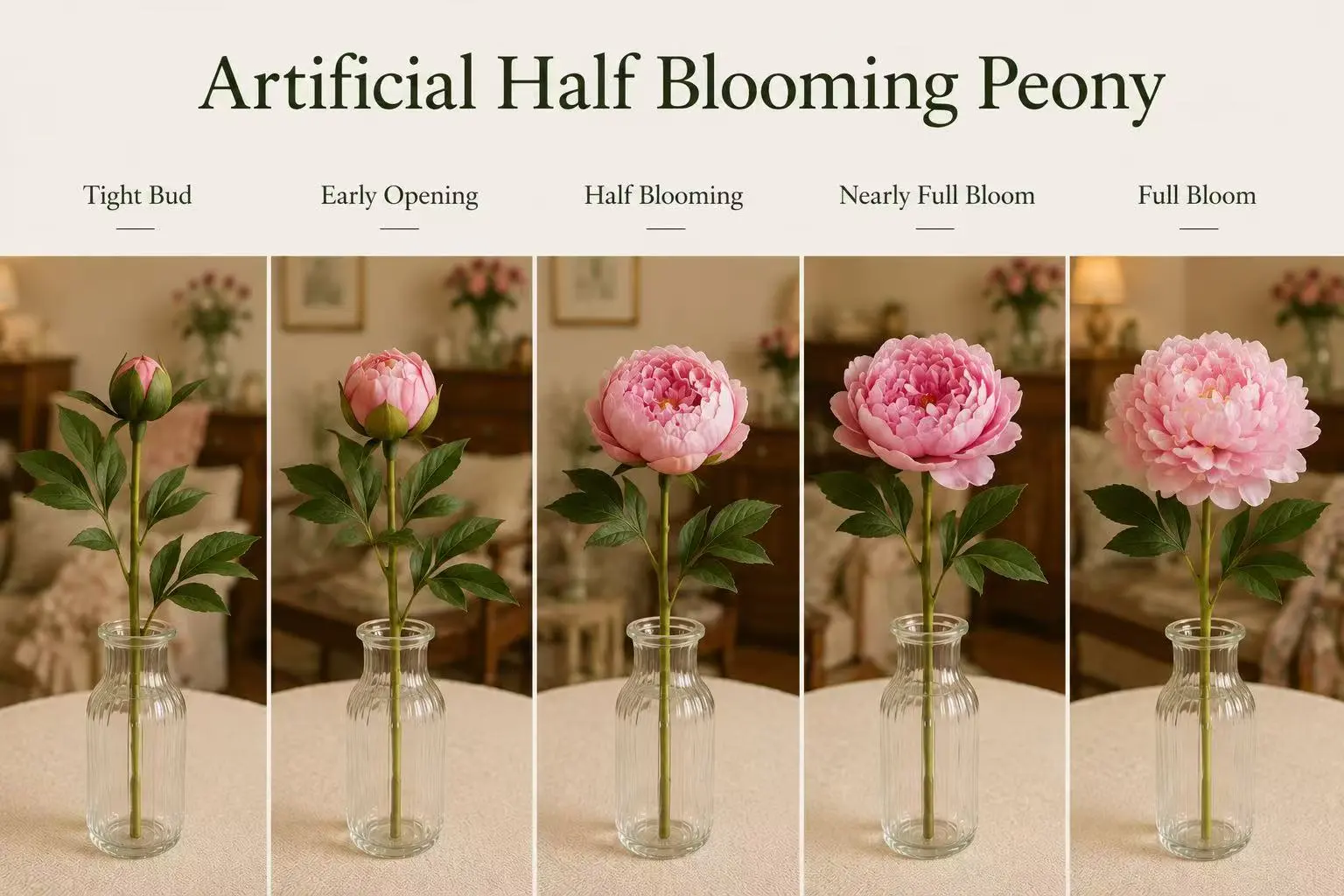
What Is an Artificial Half Blooming Peony and Why Does It Matter
Defining the Half Blooming Stage
A peony's half-blooming stage is a brief time when petals open, revealing delicate inner layers while keeping an elegant, compact form. This stage is the most beautiful but only lasts 24–48 hours in fresh flowers. An Artificial Half Blooming Peony immortalizes this fleeting beauty. These 8–12-centimeter reproductions are made of high-density polyester silk fabric with modest layering and tiny flower centers that resemble biological structures.
Technical Excellence and Material Quality
Modern 3D molding and hand-painting imitate the live peony's moisture-rich feel and natural color gradation. High-quality units have UV-stabilized pigments that resist fading under sunshine or artificial lights. The petal arrangement has 30 to 45 components, giving it depth and realism that pleases even the pickiest purchasers. The delicate, natural texture of quality polyester silk makes these blossoms feel real, making them appealing in luxury hospitality and retail.
Strategic Value in Commercial Applications
Half blooming peony provide practical benefits as well as aesthetics. Artificial flowers save water expenditures, allergens, and seasonal availability. Hotels may keep lobby arrangements year-round without pollen bothering sensitive guests. Event planners ensure visual consistency for multi-day seminars or destination weddings in severe temperatures where fresh peonies degrade quickly. Moisture-proof, deformation-resistant design makes these arrangements durable enough for commercial settings and offers long-term cost savings that conventional bouquets cannot match.
Comprehensive Comparison: Artificial Half Blooming Peony vs Alternatives
Evaluating Visual Realism and Design Flexibility
Procurement teams prioritize visual authenticity while choosing flowers. Color and petal clarity are always better in high-density polyester silk Artificial Half Blooming Peonies than in plastic ones. Half-blooming fake peonies are more subdued and ideal for corporate settings than full-blooming ones. Champagne, vintage bean paste, light purple, yellow, and gradient two-tone finishes match modern home design trends. This adaptability lets designers match flowers to brand colors or seasonal themes without crop availability.
Durability and Lifecycle Cost Analysis
Fresh peonies cost more during restricted seasonal windows and must be replaced every three to five days in commercial installations. Total cost of ownership shows that artificial alternatives reach cost neutrality within 8-12 weeks, depending on venue display frequency. For outdoor events or locations with changeable climate management, contemporary synthetic Artificial Half Blooming Peonies remain structurally intact during temperature swings from -10°C to +50°C. Stem construction with galvanized iron wire coated in eco-friendly PE allows frequent repositioning without fatigue or breaking, prolonging useful lifespan beyond five years with no maintenance.
Environmental and Health Considerations
Sustainable customers increasingly emphasize green purchases. Quality fake flowers use REACH-compliant materials without lead, phthalates, or volatile organic compounds, unlike natural flowers, which require water-intensive production and chilled delivery. Pollen-free healthcare, senior housing, and child-serving institutions remove allergy hazards. No pesticides, preservatives, or water waste are used in the maintenance regimen, only microfiber cloth dusting. Durable artificial flowers minimize resource consumption and improve operational efficiency for LEED-certified or ESG-reporting organizations.
How to Use and Maintain Artificial Half Blooming Peonies in Professional Settings
Application Strategies Across Industries
Artificial Half Blooming Peonies are useful for many commercial uses due to their 8–12 centimeter size. Clusters of three to five stems provide striking centerpieces for restaurant tables and reception desks without overpowering smaller surfaces. Designers use vibrant reds and pinks in conference rooms to foster creative teamwork in corporate offices. Gradient two-tone window displays blend champagne and light purple with premium product introductions. The consistent geometry for bridesmaid bouquets and ceremony arches ensures color continuity from rehearsal to reception, regardless of external temperature, which wedding planners love.
Preservation and Care Protocols
Maintaining aesthetics needs minimal work but smart environmental consideration. Regular monthly cleanings with compressed air or gently wet microfiber towels retain the genuine texture of polyester silk flowers. Dust collection reduces color brightness. Storage between seasonal displays should be cold, dry, and out of direct sunshine to avoid UV deterioration of pigments, even in treated materials. Protective wrapping avoids petal crushing while transporting event arrangements, yet the deformation-resistant design allows flowers to recover within hours if compressed. Soft finishes distinguish expensive items from budget ones, so avoid strong chemical cleaners.
Customization Opportunities for Brand Alignment
OEM and ODM capabilities from various providers let organizations create unique flower arrangements. Beyond color choices, custom petal counts, stem lengths, to vase proportions, and brand-logo packaging for corporate gifting programs are available. Event managers may retain creative control and reduce shipping expenses by assembling DIY kits on-site. Suppliers can make matching sets with guaranteed color consistency across hundreds of units for large-scale installations like hotel lobby renovations or convention center exhibits, solving a major issue in bulk procurement where dye lot variations can compromise visual cohesion.
Strategic Procurement Insights for Artificial Half Blooming Peonies
Identifying Reliable Sourcing Channels
Understanding supplier categories and strengths helps navigate the Artificial Half Blooming Peony business. Export-experienced manufacturers have quality control systems that assure batch-to-batch consistency, which is crucial for enterprises that need similar replacements across several years. Requesting samples before committing to minimum order quantities lets you compare petal texture, stem flexibility, and color correctness to specification sheets when considering possible partners. ISO 9001 and environmental compliance certificates show manufacturing stability and worldwide standards. In peak demand periods like holidays and wedding seasons, when manufacturing capacity may limit delivery schedules, buyers should choose suppliers who communicate lead times clearly.
Negotiating Commercial Terms and Risk Management
Boutique designers often purchase 50 stems, while wholesale wholesalers need 500. Understanding your company's consumption habits helps you negotiate MOQs that balance inventory carrying costs and unit discounts. Prepayment can get purchasers a favorable price, but staged payments related to production milestones and quality checks safeguard buyers against non-conformance. Warranty policy should include replacement units for manufacturing failures, color inconsistencies, and shipping damage, rather than credit-only fixes that delay projects.
Total Cost of Ownership Calculations
Besides per-unit pricing, procurement managers must consider ancillary charges that affect budget alignment. International shipping accounts for 15–25% of product costs, depending on volume, transit speed, and customs clearance. Individual sleeves cost more but protect better, whereas bulk packing lowers material waste but takes more attention. Quality inspection fees, storage fees for early deliveries planned around seasonal inventory planning, and return restocking fees are hidden costs. Itemized bids from transparent vendors enable cost modeling and cross-vendor comparisons based on delivered price rather than FOB terms.
Future Trends and Innovations in the Artificial Half Blooming Peony Market
Sustainable Material Advancements
The Artificial Half Blooming Peony business is shifting toward bio-based ingredients that minimize petroleum use without sacrificing authenticity. New polyester formulations contain recycled PET, appealing to circular economy purchasers. Plant-based latex coatings may improve petals' tactile authenticity and biodegradability. As regulations examine single-use plastics and non-recyclable synthetic fabrics, manufacturers investing in these developments benefit. By engaging early with environmentally conscious suppliers, procurement teams tracking these trends may receive preferential access to limited manufacturing runs of eco-certified items.
Manufacturing Technology Improvements
Sublimation printing creates lifelike color transitions that were previously only feasible with hand-painting. Digital molds capture minuscule surface textures from live peonies' three-dimensional scanning, ensuring botanical fidelity in manufacturing tooling. Heat-setting locks petal curvature at the molecular level, maintaining the half-blooming form across temperature and handling stressors. These technological advances eliminate artisan labor, which may lower prices and improve quality consistency for bulk buyers who need scalable supply chains that maintain aesthetic standards as order quantities expand.
Regional Market Dynamics and Growth Projections
As hospitality chains unify décor packages across portfolio sites and commercial real estate developers mandate low-maintenance landscaping, North American demand for premium artificial flowers will expand yearly. European markets are interested in customisable solutions that mirror regional aesthetic tastes, from Scandinavian minimalism's subtle champagne tones to Mediterranean designs' vivid pinks and yellows. Cross-border e-commerce expansion gives smaller companies access to specialist suppliers formerly exclusively available to large ones, democratizing procurement. Tracking these geographical patterns allows buyers to predict regional price swings and supply restrictions and alter procurement schedules to maximize cost structures and inventory availability during peak demand periods.
Conclusion
Understanding Artificial Half Blooming Peonies' technical specifications, comparative benefits, and procurement strategies helps firms reconcile aesthetic goals with practical realities. From basic plastic imitations to intricate botanical duplicates, the business has matured to differentiate on quality, sustainability, and customisation. Buyers who proactively connect with suppliers, examine the total cost of ownership, and stay up to date with industry advances may use artificial flowers as long-term assets. Design quality and commercial practicality build collaborations that improve brand appearance and provide financial benefits.
FAQ
How long do artificial half-blooming peonies maintain their appearance in commercial settings?
UV-stabilized pigments and high-density polyester silk give premium units five to seven years of color brilliance and structural stability inside. Commercial facilities with regulated lighting and temperature enhance lifespans, but outdoor applications may fade after three years. These blossoms are cheaper than fresh ones that need weekly replacement since they last longer with regular cleaning and storage between seasons.
Can these artificial florals be customized for specific brand color palettes?
OEM and ODM services from reputable vendors include Pantone-matched dye formulas, unique petal arrangements, and branded packaging. Custom color orders require 200–500 units and take four to six weeks to produce. Before large orders, get physical color samples to confirm digital requirements match final items.
What certifications should procurement managers verify when sourcing internationally?
REACH compliance, RoHS for electronic component safety if LED parts are included, and ISO 9001 for quality management systems are priority certifications. Environmental certifications like OEKO-TEX for textiles and FSC for packaging enhance sustainability reporting. Requesting third-party test reports instead of supplier statements verifies material safety and performance claims.
Partner with Cloud Floral Art for Premium Artificial Half Blooming Peony Solutions
Cloud Floral Art creates beautiful artificial flower arrangements for hospitality, commercial, and event industries. Our 8–12-centimeter Artificial Half Blooming Peony line is made of high-density polyester silk in vivid red, pink, light purple, yellow, white, champagne, and gradient two-tone finishes. We provide color matching and custom packaging for our fake half-blooming peonies as an experienced manufacturer. Our efficient supply chain assures constant quality throughout large orders and timely delivery to meet project deadlines. Request sample kits at guoh91278@gmail.com to learn how our design creativity, steady manufacturing capacity, and devotion to eco-friendly materials may improve your procurement strategy and give outstanding value.
References
1. Anderson, M. & Chen, L. (2022). Sustainable Materials in Decorative Floral Manufacturing: A Comparative Analysis. Journal of Applied Textile Research, 15(3), 142-158.
2. Blackwell, R. (2023). Commercial Interior Design: Cost-Benefit Analysis of Permanent vs. Fresh Floral Installations. Hospitality Management Quarterly, 28(2), 89-104.
3. European Floral Industry Association. (2023). Market Trends Report: Artificial Botanicals in B2B Procurement 2023-2025. Brussels: EFIA Publications.
4. Harrison, J. & Patel, S. (2021). Quality Standards for Synthetic Floral Products in Professional Applications. International Journal of Quality Assurance, 19(4), 267-283.
5. Morrison, T. (2022). Event Design and Logistics: Managing Floral Elements in Multi-Day Corporate Events. New York: Professional Event Planning Institute.
6. Zhang, W., Kim, H., & Rodriguez, C. (2023). Innovation in Textile Manufacturing: UV Resistance and Color Stability in Polyester Silk Fabrics. Materials Science and Engineering Review, 41(1), 33-49.
Online Message